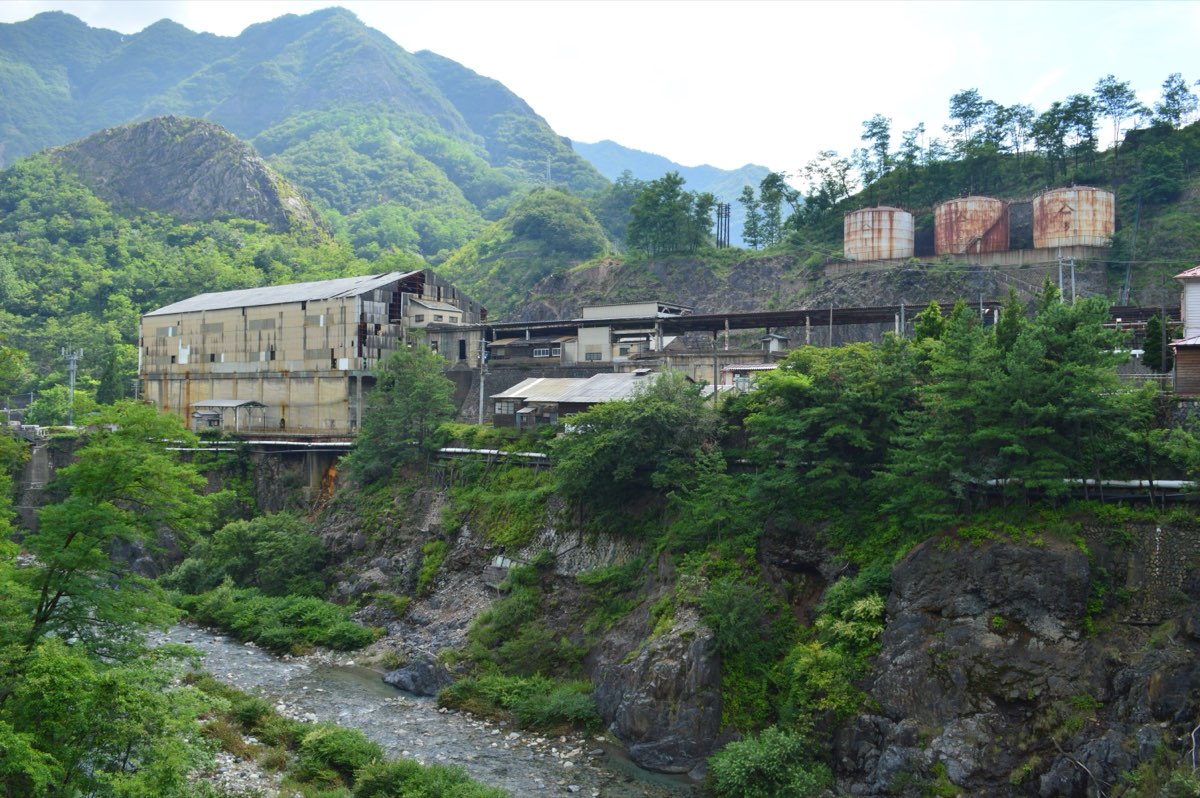
In the mountains of Ashio, now part of Nikko City in Tochigi Prefecture, copper was mined for centuries until 1973. In the late nineteenth century the mine grew into one of the largest in Japan. Waste and smoke from the same mine damaged the forests around it and the farmland along the Watarase River downstream.
This article looks at how the mine grew, what harm it caused, how affected farmers and communities responded, and how the problem was handled over the following century. Japan's Ministry of Land, Infrastructure, Transport and Tourism calls the Ashio mining pollution problem a forerunner of Japan's pollution problems.
A mine of the shoguns
Interpretations differ
The beginning of the mine is told in different ways. The Agency for Cultural Affairs records a tradition that copper was discovered in 1550, but dates full-scale operation to 1610, and says that from 1648 Ashio was an official copper mine of the shogunate. Tochigi Prefecture notes that the discovery is usually said to date from 1610, while documents have also been found indicating that the mine existed before then.
According to Tochigi Prefecture, copper tiles from Ashio were used for buildings such as Nikko Toshogu, Zōjōji and Kan'eiji temples in Edo, and Edo Castle, and a road for carrying the copper was built. The Ministry adds that Ashio copper was also exported to the Netherlands and China.
Rapid growth under Furukawa
After the fall of the shogunate the mine passed to the new government, and in 1871 it was transferred to private owners. Under them, according to Tochigi Prefecture, output stayed low. In 1877 Furukawa Ichibei bought the mine, and the Agency for Cultural Affairs calls this the start of a major turning point.
Furukawa invested in new technology and equipment. A thermal power station was built at Honzan in 1887, and the Tsūdō adit, opened in 1886, was completed in 1896.
Tochigi Prefecture states that from 1888 to 1897 Ashio produced nearly 40 percent of Japan's copper. The Agency says that in the early twentieth century it supplied about a quarter of national output.
The Agency describes Ashio as the mine with the largest copper output in Japan in the modern period. The town grew with it: Tochigi Prefecture records that in 1916 Ashio had 38,428 residents, the second-largest population in the prefecture.
Smoke, floods and poisoned fields
Tochigi Prefecture states that expansion aimed only at production had a cost. Smoke from the smelter turned the surrounding mountains bare, and wastewater caused severe damage along the lower Watarase River. The Agency for Cultural Affairs names the waste from each stage of production and the sulfur dioxide released in smelting.
Heavy cutting of timber for the mine, and a large fire at Matsuki in 1887, made the damage worse. Bare slopes released soil in the rain, and floods became frequent. According to the prefecture, these floods often brought mine-poison damage downstream, from Kiryū to Kurihashi.
The Ministry of Land, Infrastructure, Transport and Tourism notes that harvests fell sharply in the fields along the Watarase. Upstream, the smoke left the mountains so bare that Matsuki village was abandoned, and the smoke damage continued into the late Shōwa period, when the mine closed.
Petitions and the Diet
According to the Agency, a great flood of the Watarase in 1890 damaged crops downstream and brought the mining pollution problem into the open. After that flood, the head of Yanaka village submitted a petition to the Tochigi prefectural office asking for the mine poison to be removed. A thousand farmers along the river, signing together, petitioned for the mine to be closed.
Tanaka Shōzō, elected to the House of Representatives in 1890 for Tochigi, took up the issue. The National Diet Library notes that he worked on it consistently inside and outside the Diet. The Ministry says his question in the Diet in 1891 made it a major social issue, and Tochigi Prefecture says he raised the plight of the people affected more than ten times.
In 1896 the government ordered the mine to carry out pollution-prevention works, as Tochigi Prefecture and the Agency record. Each work had a deadline of 30 to 180 days, and the mine would be stopped if the works were not finished in time.
Water treatment facilities were built. The Agency's description of the Honzan smelter also mentions an order of 1897, after which desulfurization towers were installed.
In 1901 Tanaka resigned from the Diet and made a direct appeal to the Emperor Meiji, according to the National Diet Library.
Yanaka village and the retarding basin
Yanaka village lay on the lower Watarase. A document published by the Ministry's regional bureau describes it as farmland known for its fertility since the Muromachi period, which was heavily damaged by the pollution and became a center of the movement against it.
According to the Ministry, a flood in August 1902 broke Yanaka's embankment, and a great flood in September that year left the area around the village looking like a lake. Plans to improve the lower Watarase took shape from 1902, and Tochigi Prefecture took charge of buying the land for a retarding basin.
The prefecture went ahead with buying Yanaka, but some residents opposed the move to the end, and the issue was raised in the Imperial Diet. In 1907 a forced execution under the Land Expropriation Act was carried out, the first in Japan according to the Ministry. From 1904 Tanaka opposed the plan to turn Yanaka into a retarding basin, and he devoted his last years to flood-control work.
The Watarase Retarding Basin was built from 1910 and largely completed in 1922. Tochigi Prefecture notes that the land purchase caused the well-known Yanaka incident, and that the basin still serves as the key to flood control in the south of the prefecture.
Workers, closure and settlement
Tochigi Prefecture also calls Ashio a birthplace of the labor movement. In February 1907, while a union was negotiating with the company over miners' conditions, some miners rioted.
The police enforced the Security Police Regulations across the Ashio mine area, troops were sent in, and 628 people were arrested. In 1919 the miners held an 18-day strike.
A new smelting method introduced in 1956 greatly reduced the release of sulfur dioxide. The mine closed in 1973, and smelting of imported ore effectively ended in 1988. According to Tochigi Prefecture, Ashio's population fell from 9,632 on 1 February 1973 to 7,544 a year later.
Damage to farmland remained an issue in these years. In March 1972 farmers downstream applied to a national body for mediation against Furukawa Mining, saying that heavy metals seeping from waste at the Ashio works had reached their paddy fields through irrigation water and damaged their crops.
In May 1974 the mediation succeeded. According to the Environmental Dispute Coordination Commission, the company acknowledged that copper and other heavy metals it had discharged had caused the damage, and agreed to pay 1.55 billion yen. Pollution-prevention agreements with Gunma and Tochigi prefectures followed in 1976.
Under a plan adopted in 1980, contaminated farmland was restored from fiscal 1980 to fiscal 1999, and the plan set out Furukawa Mining's share of the cost. Groups formed by affected people in Kiryū and in the Nirakawa area of Ōta, both in Gunma Prefecture, also reached their own settlements with the company in 1975 and 1976.
Upstream, the national government began erosion-control works in 1937 on mountains left bare by logging and smoke. Since fiscal 1993 its erosion-control office in Ashio has run tree-planting sessions with a local nonprofit, mainly for school groups.
Visiting today
Remains of the mine, including the Tsūdō adit and the Honzan smelter site, were designated a national Historic Site in 2008 and 2014. The Agency describes them as important for understanding the development of modern industry in Japan and the history of mining pollution and its countermeasures.
The Ashio Copper Mine tourist site, opened in 1980 in the former Tsūdō adit, lets visitors ride a trolley into a 700-meter tunnel, according to Tochigi Prefecture and the official Nikko tourism guide (as of 2026). The Ministry notes that the Ashio Environmental Learning Center beside the Ashio erosion-control dam is open to visitors.
Downstream, the Yanaka village historic preservation zone lies inside the Watarase Retarding Basin in Tochigi City. The sites of the village office, a shrine, a temple cemetery, and houses remain, and guides trained by the city lead visitors. Please check each facility's official information before you go.
Sources
- 幕末から近・現代までTochigi Prefecture
- 銅とともに生きた足尾栃木県日光土木事務所 (Tochigi Prefecture Nikko Civil Engineering Office)
- 田中正造|近代日本人の肖像National Diet Library
- 足尾銅山跡(文化遺産オンライン 国指定文化財等データベース)Agency for Cultural Affairs (文化庁, 文化遺産オンライン)
- 渡良瀬川流域の砂防事業(足尾銅山の概要)MLIT Kanto Regional Development Bureau, Watarase River Office (国土交通省関東地方整備局 渡良瀬川河川事務所)
- 日本の川 渡良瀬川 - 学習・体験(足尾鉱毒事件と煙害との関わり)Ministry of Land, Infrastructure, Transport and Tourism (国土交通省)
- 足尾における体験植樹のご案内MLIT Kanto Regional Development Bureau, Watarase River Office (国土交通省関東地方整備局 渡良瀬川河川事務所)
- 渡良瀬遊水地概成100年MLIT Kanto Regional Development Bureau, Tone River Upstream Office (国土交通省関東地方整備局 利根川上流河川事務所)
- 自然「湖沼」渡良瀬遊水地Tochigi Prefecture (栃木県)
- 谷中村史跡保全ゾーン 概要MLIT Kanto Regional Development Bureau (国土交通省関東地方整備局)
- 渡良瀬川沿岸における鉱毒による農作物被害に係る損害賠償調停申請事件Environmental Dispute Coordination Commission, Ministry of Internal Affairs and Communications (総務省 公害等調整委員会)
- Ashio Copper Mine (Nikko Official Guide)Nikko City Tourism Association (Nikko Official Guide)
- 自然歩道案内(足尾・古峰ヶ原コース)Tochigi Prefecture (栃木県環境森林部自然環境課)