Dark soy sauce is so common in Japanese cooking today that it is easy to forget it once had to win a market. In the early Edo period, much of the soy sauce sold in Edo (today's Tokyo) was shipped in from the Kamigata region around Kyoto and Osaka. In the centuries that followed, brewers in two towns of Shimōsa Province, Noda and Chōshi, in what is now Chiba Prefecture, took that market for themselves.
Their story is one of beans and wheat, salt and water, and above all rivers. According to Chiba Prefecture, the prefecture today produces more soy sauce than any other in Japan.
From "goods from the west" to local soy sauce
When Tokugawa Ieyasu arrived in the Kantō region in 1590, Noda City's history explains, the farm villages around Edo produced little, and the city relied on kudari-mono, "goods coming down" from Kyoto and Osaka. Soy sauce was no exception: in the early Edo period, soy sauce from Kamigata was the mainstream in Edo.
As Edo grew, new industries rose across Kantō, and the city gradually depended less on shipments from the west. Cheaper goods made in the Kantō countryside, called jimawari-mono, began to push the western goods aside. According to the prefecture, Noda and Chōshi developed as the centres of soy sauce brewing in Kantō.
The prefecture names three reasons. The climate suited brewing, the Edo and Tone rivers offered water transport, and the plains nearby grew soybeans and wheat, the raw materials. By river, soy sauce from Noda and Chōshi could reach Edo in large quantities and in a short time.
How soy sauce is made
Noda City describes the method. Steamed soybeans and roasted wheat are cultured with kōji mould and mixed with salt water to make moromi, a mash that is stirred as it ferments. After about a year the mash is pressed, and the liquid is heated to finish the soy sauce.
Soy sauce made this way is called koikuchi, "dark" soy sauce, and it is what the word soy sauce usually means in Japan today. The city contrasts it with the lighter usukuchi of the Kansai region, made with unroasted wheat and more salt, and with tamari, made without wheat and used mainly around Nagoya and Mie.
Chōshi: brewing for settlers from the west
Chōshi began brewing early. According to Noda City's history, from the late sixteenth century seasonal fishermen from Nishinomiya in Settsu Province and from Kii Province (today's Hyōgo and Wakayama) came to Chōshi and the east coast of the Bōsō Peninsula. In the early seventeenth century many settled and opened grounds for drying sardines.
Soy sauce came to be made around Chōshi to suit the taste of these settlers from the west. The Tanaka Genba family of Iinuma village, founders of today's Higeta Shoyu, are said to have learned brewing in 1616 from Sanagi Kurōemon, a merchant of Nishinomiya.
Hamaguchi Gihei, founder of Yamasa Shoyu, came from Hiro village in Kii Province. The city's history says he seems first to have traded goods from Kamigata, and that the family's account books record miso and soy sauce brewing from the early eighteenth century.
Interpretations differ
Chiba's official tourism website, describing the company, gives 1645 as Yamasa's founding year. The city's history cites the family's account books, which record brewing from the early eighteenth century, so the date of the first brewing differs between the accounts.
Noda: the river that ran to Edo
The rivers around Noda were themselves shaped by the shogunate. According to Noda City, works in the early seventeenth century turned the Tone River so that it flowed into the Pacific Ocean instead of Edo Bay. This completed a route for goods from Chōshi up the Tone to Sekiyado, down the Edo River, and along the Onagi canal into Edo.
A checkpoint for boats was set up at Sekiyado in 1616. In the city's account, the shogunate valued Sekiyado as a key point of water transport for the defence of Edo.
Noda's soy sauce has a legend of its own. Tradition says it began in the Eiroku era (1558–70), when an ancestor of Iida Ichirōbei presented tamari soy sauce to the Takeda family. The city notes, however, that the first case confirmed in written records is the start of brewing by Takanashi Hyōzaemon, village head of Kamihanawa, in 1661.
In the late eighteenth century the Mogi families also expanded their brewing, and Kantō soy sauce overwhelmed the soy sauce from the west and came to dominate the Edo market. The Noda brewers formed an association in 1781.
A race won by distance
Chōshi had started first, but Noda was closer. In the fourth month of 1783, the Chōshi brewers' association petitioned the Takasaki domain office to lower the fees it paid. Brewers had appeared within three or four ri of Edo, it complained, and their soy sauce was popular because it cost so little to ship.
As a result, the petition said, Edo wholesalers who had been Chōshi's customers were refusing its cargo or demanding lower prices. According to Noda City, boats took four to five days from Chōshi to Edo, while Noda could send its soy sauce down the Edo River and reach Edo on the same day.
The city considers this access to Edo one of the main reasons Noda grew rapidly from the late eighteenth century. In 1824 the "Noda group" of brewers had nineteen members, and the group's output grew greatly toward the end of the Edo period.
River ports and many hands
Soy sauce left Noda from river ports called kashi. Noda City explains that rice and many other goods travelled by river boat on the Tone and Kinu rivers from Kantō and Tōhoku to Edo, and that goods also went the other way.
Imagami was one of several river ports in Noda. In the 1770s the shogunate fixed the river-port wholesalers across Kantō and began collecting fees from them. At Imagami the fee was shared by five people, two of them from Noda town, which the city reads as a sign of how important the port was to Noda's soy sauce.
Brewing also needed many workers. A report of 1858 mentions a Mogi Sahei storehouse at Imagami with many servants and day labourers, one of them from Izu Province. In the city's words, soy sauce and river transport drew many people to the port.
Soy sauce for the shogun's castle
By the nineteenth century, Noda brewers supplied Edo Castle. In 1829 the Takanashi Hyōzaemon family became purveyor of soy sauce to the Honmaru and Nishinomaru of Edo Castle, and in 1833 the Mogi Sahei family did the same. By the mid-nineteenth century the old Noda area had nineteen brewers.
In Edo, the prefecture says, this richer, sharper koikuchi soy sauce won great support and gradually outsold the soy sauce from the west. Combined with dried bonito and white mirin, it helped give rise to some of Edo's representative foods: the sweet sauce brushed on sushi toppings, grilled eel, and the dipping sauces for tempura and soba.
Into the modern age
Noda's brewing remained large in scale in the early Meiji period. According to the city, in 1872 thirteen Noda brewers set down 36,550 koku of soy sauce, a scale of production far beyond other areas. In 1877 the Mogi Sahei family's Kikkoman brand won an award at the first National Industrial Exhibition in Tokyo.
In 1887 the brewers formed a union to agree prices, shipments and wages, and in 1900 it founded a man-powered railway and a bank. In 1917 the Noda brewers, most of them related families, merged to form Noda Shoyu Co.; only the Yamashita Heibei family stayed out. Its trademarks were gradually unified as Kikkoman, which the city describes as becoming the industry's largest soy sauce brand.
Visiting today
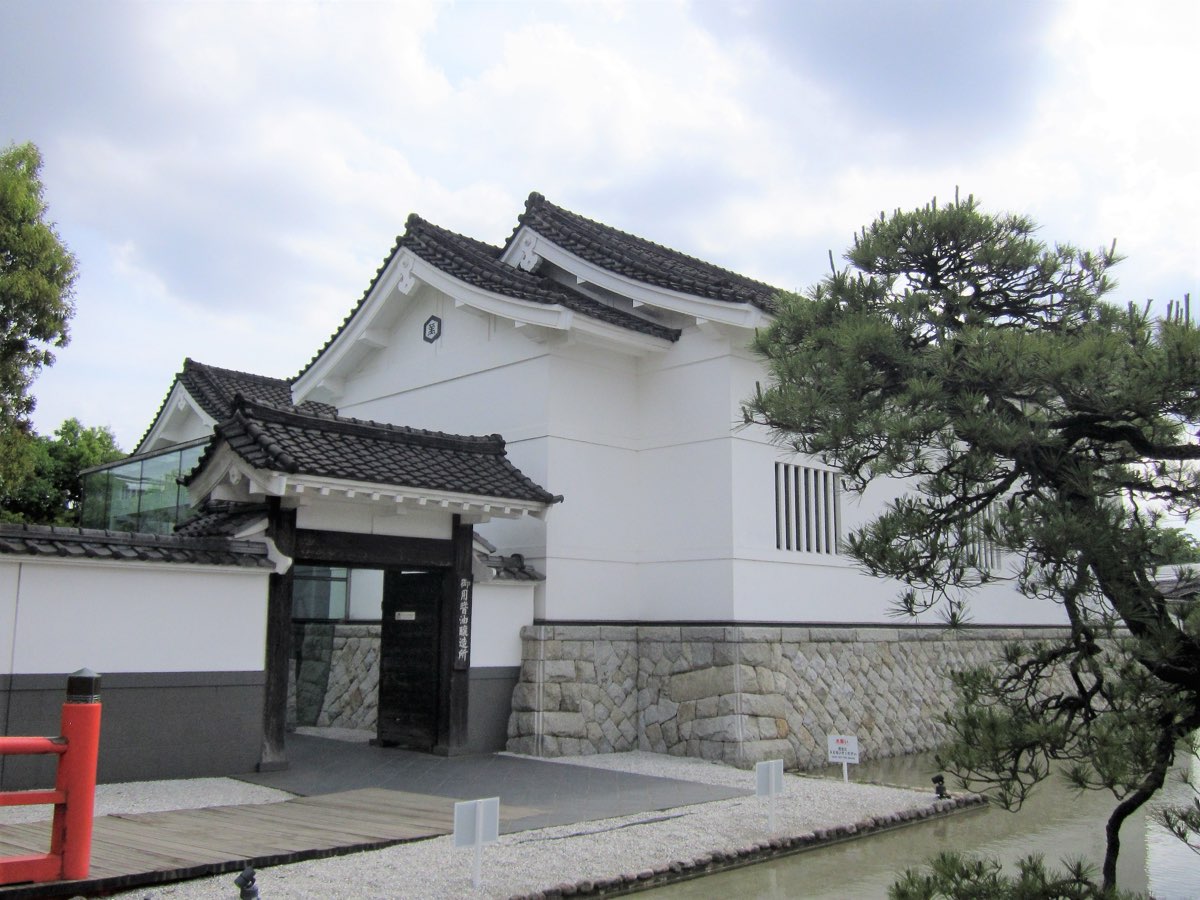
According to the prefectural tourism association, the Noda City Museum, opened in 1959, was the first registered museum in Chiba Prefecture, and its second floor shows materials on soy sauce together with Noda's history and folk materials. The city says the museum has collected soy sauce materials since it opened.
The Noda Civic Hall occupies the former residence of the Mogi Sahei family, built around 1924 and given to the city in 1956.
Kikkoman Monoshiri Shoyu-kan, inside Kikkoman's soy sauce factory in Noda, according to the tourism association, lets visitors follow how soy sauce is made, see moromi maturing, and learn from exhibits on its history. As of 2026, the tourism association lists admission as free, by reservation only.
In Chōshi, according to the tourism association (2026), Yamasa Shoyu runs factory tours by reservation, with a short film and a walk through the factory, and displays historical materials and old brewing tools.
Opening days and tour times change, so check the official websites before you visit.
Sources
- 千葉県の発酵文化Chiba Prefecture
- 近世 江戸時代<時代概説>Noda City
- 近世の野田の醬油Noda City
- 河岸に集まる人びとNoda City
- 近代の野田の醬油醸造業Noda City
- 市民会館(旧茂木佐平治邸)建築100周年記念事業「野田のおしょうゆコレクション」と「夏障子の特別公開」Noda City
- 野田市郷土博物館Chiba Prefectural Tourism and Local Products Association
- キッコーマンもの知りしょうゆ館Chiba Prefectural Tourism and Local Products Association
- 【工場見学】千葉は醤油の生産日本一!「ヤマサ醤油」工場で発酵を学ぼう!Chiba Prefectural Tourism and Local Products Association