On the night of New Year's Eve, across almost the whole of the Oga Peninsula in Akita Prefecture, young men put on masks and straw costumes and go from house to house as Namahage. They call out "Are there any lazy people? Are there any crying children?" and move noisily through the rooms. The families inside receive them with food and sake.
To an outsider the masks can look like demons. For the people of Oga, Oga City explains, Namahage are visiting deities who come at the turning of the year to scold laziness and to bring good health, good harvests, and the bounty of the mountains and the sea. In 2018, Oga no Namahage was inscribed on UNESCO's Representative List of the Intangible Cultural Heritage of Humanity as part of "Raiho-shin, ritual visits of deities in masks and costumes."
Visiting deities, not monsters
The Namahage Museum in Oga, operated by Oga Chiiki Shinko Kosha Co., Ltd., says Namahage are believed to be messengers of the gods who dwell on Shinzan and Honzan. Once a year they visit each household. They admonish wrongdoing, drive away misfortune, and bring good harvests, good catches, and good fortune.
The Agency for Cultural Affairs describes the ritual in similar terms. Young men of the community wear masks and straw capes called kede, visit homes, and behave toward people with a dignified bearing. Its purpose is that a deity arrives at a turning point of the year and gives people its blessing.
The name itself is traditionally explained through a local word. Sitting too long by the open hearth in winter leaves heat marks on the hands and legs, called namomi in the local dialect. Oga City says the word "Namahage" is said to come from "namomi-hagi," peeling off these marks to scold laziness.
Oga City adds that namomi-hagi also carries a sense of blessing for the new year, and that its main focus is the new members of a household, such as children and newly married wives. Namahage carry a large deba knife for "peeling" the marks. In some districts they also carry a staff with a gohei, a paper offering that marks the presence of a deity.
New Year's Eve, house by house
Oga City's official Namahage website describes the evening step by step. In the late afternoon, the young men who will play Namahage gather at a meeting house and put on their kede.
Masks are handed out and sacred sake is offered to the masked Namahage. In the example Oga City describes, they then go to Shinzan Shrine for a ritual that fills them with the spirit of the deity.
A Namahage does not simply burst into any home. A guide called the sakidachi goes ahead and checks with each household that the Namahage may come in. If the family has suffered a death that year or has someone ill at home, the Namahage do not enter; they stamp their feet at the entrance and move on.
Inside, the Namahage roar and move around the house. The head of the household calms them and serves them food and sake.
The Namahage then question the host about the family and the year's crops, and pray for the family's health and a good harvest in the coming year. As they leave, they tell the family to stay well in the new year and warn the children to listen to their parents.
In the Shinzan district, Namahage wear hornless masks said to be handed down from long ago and go around in pairs. They stamp seven times when they enter, five times before sitting at the tray of food, and three times when they rise to leave. The Namahage Museum calls this "seven, five, three" pattern a custom unique to Shinzan's Namahage.
Families also keep something after the visit. According to local tradition recorded by Oga City, straw that falls from the kede can be wrapped around an ailing part of the body to aid healing, so households carefully gather it up.
The details differ from place to place. The Agency for Cultural Affairs notes that each community has its own variations within a shared form.
Oga City says masks are made from tree bark, carved wood, paper pasted on baskets, papier-mâché, and other materials. More recently, plastic masks and masks by local woodcarvers have also come into use.
Old records and origin stories
According to Oga City, the oldest known record of Namahage comes from Sugae Masumi (1754–1829), a travel writer of the Edo period. In a work titled "Oga no Samukaze," he described with text and pictures the Namahage he saw at Miyazawa in Oga on Bunka 8 (1811), 1st month, 15th day (lunisolar calendar). He wrote of it as "namomi-hagi."
The date matters. The Agency for Cultural Affairs explains that until the Showa 20s (1945–1954) the ritual was held at Koshogatsu, the "Little New Year." Today it takes place on 31 December.
Interpretations differ
No one knows for certain how the custom began. Oga City presents several explanations as theories. One links Namahage to mountain ascetics of the shugendo tradition, since Honzan and Shinzan were long centers of mountain training. Another sees them as messengers of the mountain deity who protects village life. A third connects them with foreigners who drifted ashore on the Oga coast.
Oga is also home to a well-known legend, told on Oga City's website. Emperor Wu of Han China came to Oga in search of a herb of eternal life, bringing five bats that turned into demons and worked for him. Given one day off, on the 15th day of the first month, the demons came down to the villages and carried off crops, livestock, and even village daughters.
The villagers proposed a test: if the demons could build 1,000 stone steps from the shore to the Gosha-do halls on the mountain in a single night, before the first rooster crowed, they would receive a daughter each year; if not, they must never come down again. When the demons had built 999 steps, the villagers had a creature called Amanojaku imitate a rooster's crow, and the demons fled back to the mountain. This is a local legend, not a historical account.
From the 20th century onward, Namahage drew attention from folklorists. Oga City lists studies and writings by Yanagita Kunio, Orikuchi Shinobu, and Okamoto Taro.
It also names Yoshida Saburo, a folklore researcher from Oga. His detailed 1935 account of Namahage in Okura, Wakimoto Village, and his later survey across Minamiakita District became pioneering works on the subject.
Protection and UNESCO inscription
The ritual was designated a national Important Intangible Folk Cultural Property in 1978 under the name "Oga no Namahage," with the Oga no Namahage Preservation Society as the safeguarding body. The official name uses katakana, but Oga City notes that locals often write "namahage" in hiragana.
On 29 November 2018, the UNESCO committee inscribed Raiho-shin. The element groups ten visiting-deity rituals in eight prefectures, all designated as Important Intangible Folk Cultural Properties.
It is an extension of Koshikijima no Toshidon, inscribed in 2009. According to the Agency for Cultural Affairs, safeguarding measures include training successors, making records, and repairing or renewing ritual equipment.
UNESCO describes the shared character of these rituals. On days that mark the new year or a change of season, local people dressed as deities visit homes, warn against laziness, and teach children good behavior.
The household offers a meal. Community members share the work of preparing and performing the rituals, and UNESCO notes that the rituals help participants, especially children, develop a sense of identity and belonging.
The practice continues. Oga City reports that on New Year's Eve 2025, the ritual was held in 71 communities in the city.
Visiting Oga today
The New Year's Eve ritual itself takes place inside local homes. Two facilities near Shinzan Shrine introduce it to the public.
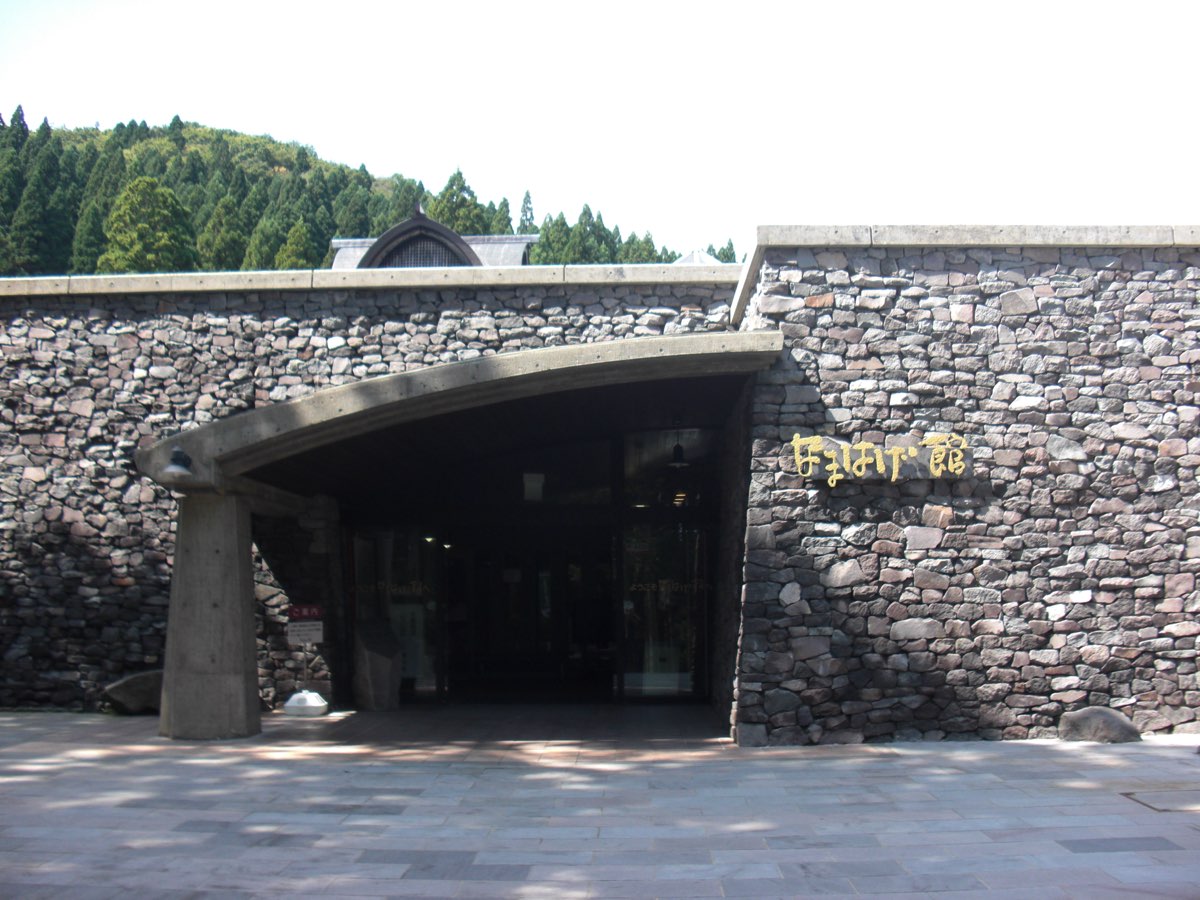
The Namahage Museum displays more than 150 Namahage masks that were actually used in districts across Oga. It also shows a film about the New Year's Eve ritual and, on some days, demonstrations of hand-carving Namahage masks.
Next door, the Oga Shinzan Folklore Museum is housed in a magariya, a farmhouse of a type typical of the Oga area. Because the New Year's Eve ritual was hard for outsiders to see, it holds learning sessions in which visitors can experience the Namahage custom of the Shinzan district.
In February, the Namahage Sedo Festival takes place at Shinzan Shrine. Oga City describes it as a tourism event begun in 1964 that combines the shrine's Saito-sai ritual, held on 3 January, with the Namahage tradition, including Namahage descending the mountain with torches. Opening times and festival dates change, so check the official websites of the Namahage Museum and Oga City before visiting.
Sources
- 男鹿のナマハゲ(「重要無形民俗文化財」男鹿のナマハゲ 公式サイト トップページ)Oga City (男鹿市 文化スポーツ課 文化ジオパーク推進班)
- 地域のナマハゲ行事(「重要無形民俗文化財」男鹿のナマハゲ 公式サイト)Oga City (男鹿市 文化スポーツ課 文化ジオパーク推進班)
- なまはげ柴灯まつり(「重要無形民俗文化財」男鹿のナマハゲ 公式サイト)Oga City (男鹿市 文化スポーツ課 文化ジオパーク推進班)
- 男鹿のナマハゲ(文化遺産オンライン)Agency for Cultural Affairs (文化庁, 文化遺産オンライン)
- 来訪神:仮面・仮装の神々(文化遺産オンライン 無形文化遺産)Agency for Cultural Affairs (文化庁, 文化遺産オンライン)
- Raiho-shin, ritual visits of deities in masks and costumesUNESCO Intangible Cultural Heritage
- 男鹿のナマハゲ|なまはげ館Namahage Museum (なまはげ館, operated by Oga Chiiki Shinko Kosha Co., Ltd.)
- なまはげ館|館内紹介Namahage Museum (なまはげ館, operated by Oga Chiiki Shinko Kosha Co., Ltd.)
- 男鹿真山伝承館|なまはげ館Namahage Museum (なまはげ館, operated by Oga Chiiki Shinko Kosha Co., Ltd.)