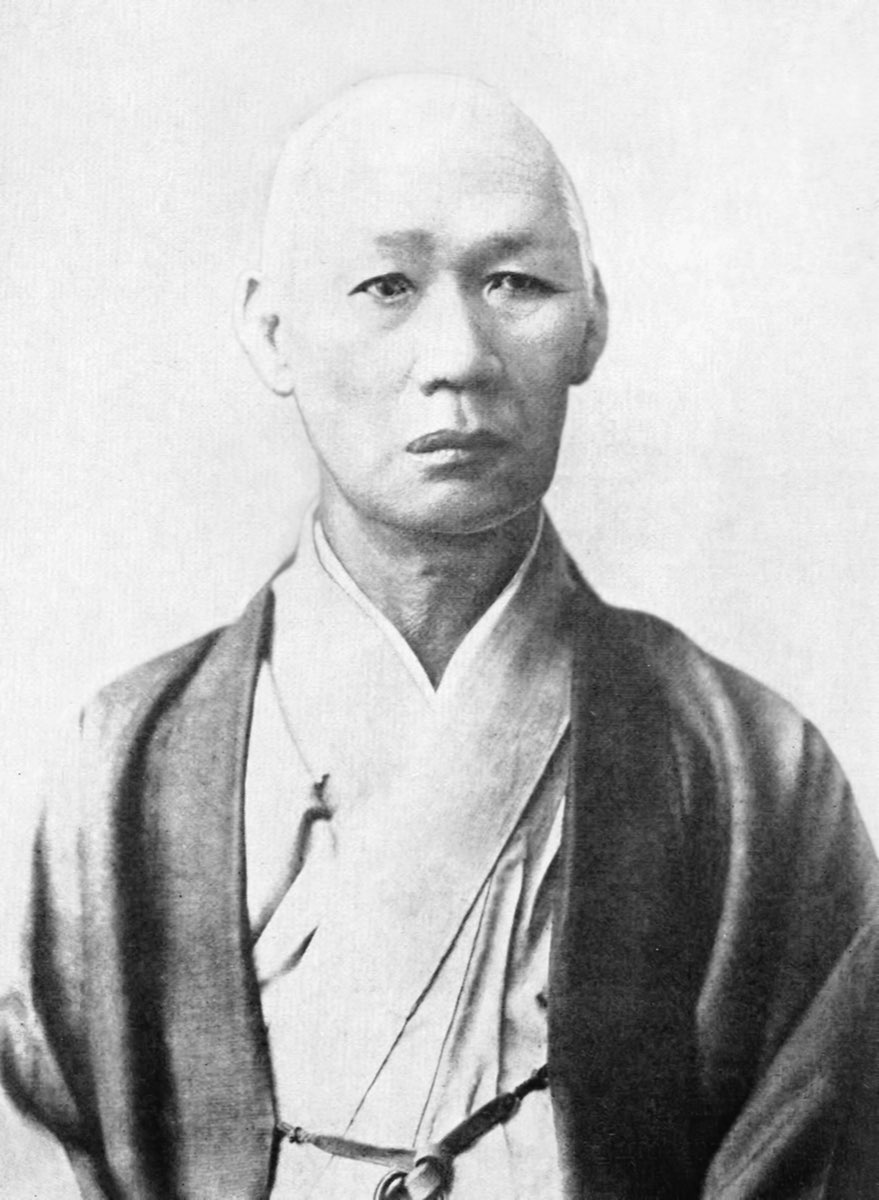
In 1841 a fourteen-year-old boy from a fishing village in Tosa went out to sea and did not come home for more than eleven years. The National Diet Library describes him simply as a castaway, interpreter and educator. Rescued by an American whaling ship, he grew up and studied in the United States, then returned to Japan just before Commodore Perry's arrival.
He is known in Japan as John Manjirō, and later as Nakahama Manjirō. This article follows his story from the shore of Nakanohama to Massachusetts and back, using records from the National Diet Library, Tosashimizu City and Kōchi Prefecture's Sakamoto Ryōma Memorial Museum.
A fisherman's son on Torishima
According to Tosashimizu City, Manjirō was born in 1827 into a poor fishing family in Nakanohama, in today's Tosashimizu, Kōchi Prefecture. He was the second son among two sons and three daughters. The city's chronology adds that his father died when he was nine.
In 1841, at the age of fourteen, he joined four companions for the first fishing trip of the year in a boat about eight metres long. The city's chronology dates the trip to the fifth day of the first month (lunar calendar) and places it off Cape Ashizuri. Three days out, a storm caught the boat and it drifted.
Six days later the five men reached Torishima, an uninhabited island in the Pacific that the city places about 760 kilometres south of Tosashimizu. The chronology says they lived on a little rainwater, seaweed and seabirds. After 143 days on the island, they were found by the American whaling ship John Howland, which had come to collect sea turtle eggs for food.
Rescue did not mean an easy road home. Tosashimizu City explains that Japan was then closed to most foreign contact, so foreign ships could hardly approach its coast.
Even if the castaways returned, contact with foreigners alone could put their lives at risk. The city notes that in 1837 the American ship Morrison had been driven off when it tried to enter Uraga with castaways aboard.
Life in Massachusetts
The ship's captain, William H. Whitfield, took the five castaways to Hawaii.
There, the city says, Manjirō decided to go on to America alone, and the captain readily agreed, leaving his four companions in Hawaii. He was given the nickname "John Mung," taken from the name of the ship.
In 1843, two years after the rescue, the John Howland returned to New Bedford, Massachusetts, which the city calls America's largest whaling base. Tosashimizu City says Manjirō was the first Japanese person to set foot on the American mainland.
According to the National Diet Library, the captain's kindness allowed him to go to school in the United States. Tosashimizu City writes that Whitfield brought him to his hometown of Fairhaven and had him taught English, mathematics, surveying, navigation and shipbuilding. The city's chronology names the Oxford school and the Bartlett school, and the city calls him Japan's first student abroad.
After his schooling he went to sea again on whaling ships. The chronology says that from 1846 he sailed on the whaler Franklin, from the Atlantic around the Cape of Good Hope into the Indian Ocean, and became first mate in 1848.
When he returned to Fairhaven, the California Gold Rush had begun. The city says he went west to earn money for his journey home, made 600 dollars, and then went straight to Hawaii, where his fellow castaways were living. According to the chronology, he bought a boat named the Adventure and boarded the ship Sarah Boyd with two of them, including Denzō (Fudenojō).
The road back to Tosa
In 1851 Manjirō landed in the Ryūkyū Kingdom, today's Okinawa, ten years after he had drifted away. The National Diet Library says he returned home to Tosa in 1852 after being questioned. Tosashimizu City adds that he was held in Ryūkyū for about half a year and then escorted to Satsuma and Nagasaki for questioning.
The city's chronology says he was questioned eighteen times at the Nagasaki magistrate's office. Back in Tosa, Yoshida Tōyō questioned him for seventy days on the order of the domain lord, Yamauchi Toyoshige. He then met his mother again after eleven years and ten months, though the chronology says they had only five days together.
His account of the outside world drew wide interest. Kōchi Prefecture's Sakamoto Ryōma Memorial Museum explains that in 1852 Kawada Shōryō had Manjirō live in his home, listened to his stories of the voyage and of foreign countries, and wrote them down as the Hyōson kiryaku. The museum also says that handwritten copies of his story are said to have circulated in several versions.
Serving the domain and the shogunate
According to Tosashimizu City, the Tosa domain made him a samurai, though of the lowest rank, which the city calls an exceptional rise at a time of strict social classes. The chronology says he taught at the domain school, the Kōjukan, where Gotō Shōjirō and Iwasaki Yatarō were among those he taught directly.
In 1853, the year after his return, Commodore Perry's ships arrived. The National Diet Library says the shogunate summoned Manjirō and gave him the surname Nakahama. The city's chronology adds that he became an assistant to Egawa Tarōzaemon and a direct retainer of the shogunate.
Interpretations differ
Tosashimizu City's pages do not agree on exactly when he began to use the name Nakahama. The chronology links it to his summons by the shogunate in 1853, while another page links it to his promotion to samurai in Tosa. All of the city's pages agree that the name comes from his birthplace.
Not everyone welcomed him. The city says that, precisely because of his abilities, conservative domains such as Mito feared he might be an American spy, and that he was left out of the interpreters for Perry's second visit. He went on to work in translation, shipbuilding, navigation, surveying and whaling.
The chronology lists a navigation book he wrote out in 1855 and an English conversation book he compiled in 1859. In 1857 he became an instructor at the naval training school (Gunkan Kyōjusho) and travelled to Hakodate to teach whaling.
Across the Pacific again
In 1860 the shogunate sent a mission to the United States to exchange ratifications of the Treaty of Amity and Commerce, which Tosashimizu City calls its first official mission abroad. According to the National Diet Library, Manjirō sailed as an interpreter on the Kanrin Maru. Tosashimizu City notes that Katsu Kaishū and Fukuzawa Yukichi were also aboard.
After his return, the National Diet Library says, he took part in a survey for the development of the Ogasawara Islands and became a teacher at the Kaiseijo, the school that later became the University of Tokyo. The city's chronology adds a journey to Europe in 1870. He died in Tokyo at the age of seventy-one.
Tosashimizu City says that Sakamoto Ryōma is said to have learned about life in America and democracy through what Kawada Shōryō had heard from Manjirō. The city also says he is considered to have greatly influenced Itagaki Taisuke, Nakae Chōmin and Iwasaki Yatarō.
Places to visit
The John Manjirō Museum in Tosashimizu moved in 2006 from the Cape Ashizuri area to the grounds of Umi-no-eki Ashizuri. According to the city, it presents his life with models and panels, and a statue of the young Manjirō stands in the Ashizuri port plaza. Please check the museum's official website for opening hours.
In Nakanohama, his birthplace, the museum's website lists a monument made for the 150th anniversary of his homecoming and a restored birth house. Volunteers in the city raised donations to rebuild the house as a thatched wooden building, designed from an existing photograph. It was completed in 2010 and is open free of charge.
The city also says that a bronze statue of Manjirō stands at the entrance to Cape Ashizuri, looking toward Fairhaven, his "second home." In Kōchi City, the Sakamoto Ryōma Memorial Museum has a John Manjirō room, and the Hyōson kiryaku is among the materials it introduces.
Sources
- 中浜万次郎(近代日本人の肖像)National Diet Library
- ジョン万次郎の生涯Tosashimizu City
- 常設展 ジョン万次郎展示室Kōchi Prefectural Sakamoto Ryōma Memorial Museum
- ジョン万次郎の歴史Tosashimizu City
- ジョン万次郎資料館(海の駅あしずり)Tosashimizu City
- ジョン万次郎生誕地Tosashimizu City
- ジョン万次郎ゆかりの地John Manjirō Museum (Tosashimizu City Tourism Association)