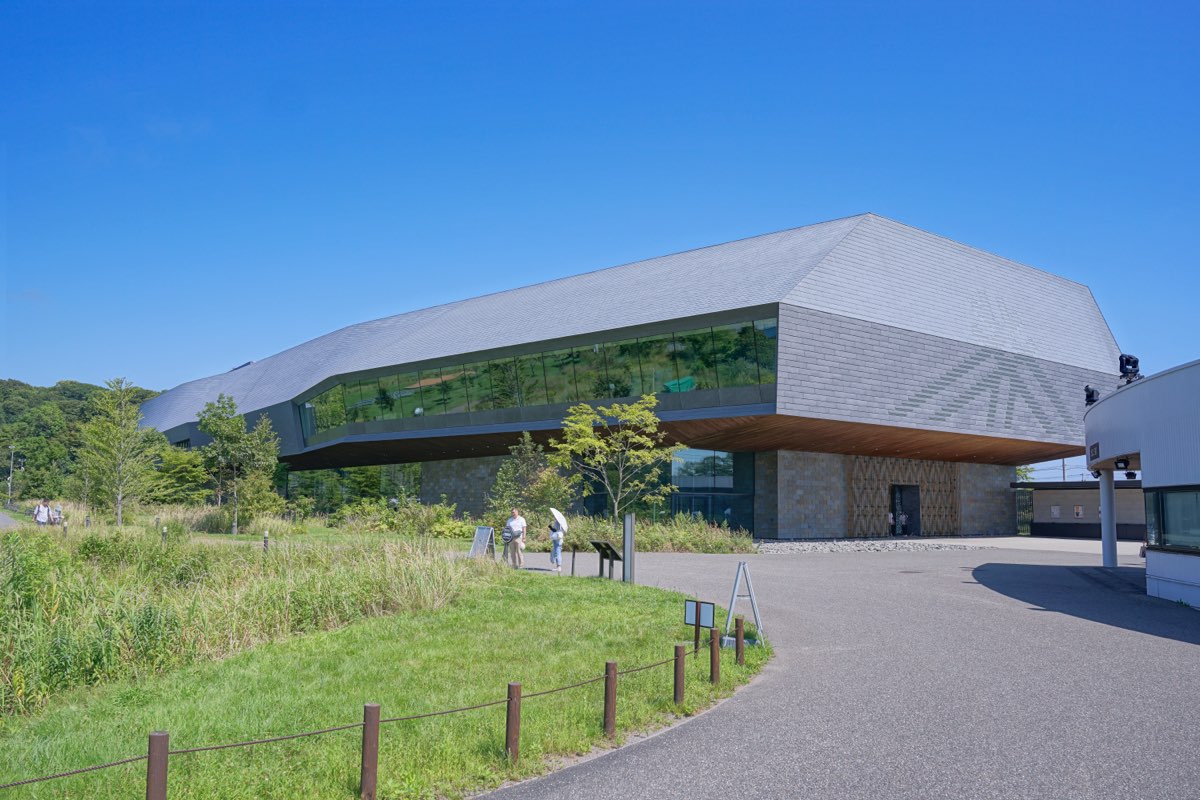
The Ainu are an Indigenous people of the area around the northern part of the Japanese archipelago, especially Hokkaido. Until around the nineteenth century, Ainu communities lived in Hokkaido, Sakhalin, the Kuril Islands, and the northern part of Tohoku.
Many still live in Hokkaido, and others live elsewhere in Japan and abroad. In the Ainu language, the word ainu means "human."
This article follows three long changes: trade across the northern seas, the growing control of the Matsumae domain and then the Meiji state, and Ainu efforts to protect and renew their culture. The National Ainu Museum tells this history from an Ainu point of view, building its permanent exhibition around "we": our language, world, lives, history, work, and exchanges.
Traders of the northern seas
The National Ainu Museum traces the beginning of Ainu history back to the arrival of people in Hokkaido about 30,000 years ago. From about the seventh century, it says, millet farming was added to hunting, gathering, and fishing, and a distinctive culture active in sea trade took shape.
Trade was part of Ainu culture itself. According to the museum, the lacquered cups used in Ainu rituals were made in Honshu, knife blades were iron from Honshu or the continent, and cotton, silk, and glass beads came from the south and sometimes from China.
To buy them, Ainu people exported kelp, dried salmon, and sable and sea-otter furs. They were hunters and fishers, the museum says, but also traders.
Interpretations differ
In a Hokkaido University Museum paper, the historian Sekiguchi Akira dates the first known mention of sea-otter fur in Japanese records to 1423. He proposes that, in medieval times, the fur passed from Ainu traders to the Kakizaki (later Matsumae) family, then to the Andō of Tosaminato, the Takeda of Wakasa, and finally the Ashikaga shoguns in Kyoto. This route is his hypothesis, not a complete map of Ainu exchange.
Relations with Japanese settlers, called Wajin, could turn violent. In 1457 an Ainu leader named Koshamain fought the Wajin on the Oshima Peninsula in southern Hokkaido.
His forces took one Wajin stronghold after another, but the Wajin won in the end. A peace between the Kakizaki (later Matsumae) family and the Ainu followed in 1551.
Matsumae and the narrowing of trade
In 1604 the Matsumae family received a black-seal document from Tokugawa Ieyasu that placed trade with the Ainu in its hands. The domain divided Hokkaido into a Wajin area and Ezochi, where Ainu people lived, and strictly controlled travel between them. According to the Upopoy museum, Ainu people who had traded freely with neighboring peoples now found their places of trade restricted.
The domain then rewarded its retainers, instead of with land or rice, with the right to trade with Ainu people in set areas of Ezochi. To raise profits, they limited Ainu freedom of movement and imposed terms of trade in their own favor. Against this background, Ainu people led by Shakushain fought the Matsumae domain.
The shogunate ordered domains in Tohoku to send troops, and the war ended when Shakushain was killed through deception. Afterwards, Matsumae strengthened its control over the Ainu.
In the eighteenth century, Wajin merchants took over the trade under contract and ran fisheries. According to the Upopoy museum, many Ainu people were made to work there, and Ainu society was drawn into the Wajin economy. A teachers' guide from the Sapporo City Board of Education adds that some Wajin threatened or beat Ainu people and took their wives.
In 1789, Ainu people on Kunashiri Island and the facing Menashi coast rose up and killed Wajin who had treated them cruelly. The Ainu Association of Hokkaido links the uprising to forced work at fishing stations, cruel treatment, and harsh working conditions. The Kunashiri leader Tsukinoe and others persuaded those who had risen up and sought talks with Matsumae, but the domain executed the leaders; the Ainu Association gives their number as 37.
Meiji rule: land, livelihoods, and assimilation
In 1869 the new Meiji government set up the Kaitakushi, or Hokkaido Development Commission, to develop and govern Hokkaido, the Kuril Islands, and Sakhalin. The next month Ezochi was renamed Hokkaido.
The Sapporo teachers' guide calls this a unilateral incorporation into Japan. The commission promoted settlement and industry until it was abolished in 1882.
The new land system was a turning point. Under Article 7 of the Land Regulation of 1872 (Meiji 5), lands that Ainu people had used for hunting, fishing, and logging were to be divided into lots with title deeds issued to owners. The Sapporo guide explains that this meant the state took Ainu-used land and passed it into private hands.
Ainu people saw this living space, called iwor, as shared by everyone in a kotan, or settlement. The commission imposed individual ownership without understanding that view, and settlers from Honshu registered ownership of the lots.
Livelihoods were restricted too. Hunting with poison arrows and set bows and catching salmon upriver were banned, and, the Upopoy museum notes, even staple food became hard to secure.
The commission also banned customs such as women's tattoos and men's earrings, and encouraged learning Japanese. Ainu became Japanese nationals through the family register system, but officials labelled them "former natives" (kyūdojin), a term that brought discrimination.
After an 1875 treaty made Sakhalin Russian territory, 841 Sakhalin Ainu were relocated to Sōya in Hokkaido and, the next year, to Tsuishikari in today's Ebetsu. Many died in epidemics such as cholera, and many later returned to Sakhalin. The Agency for Cultural Affairs notes that the commission's records reveal the harsh life forced on Ainu people.
In 1899 the government passed the Hokkaido Former Aborigines Protection Act. It offered land to Ainu people on condition that they farm it, and set up Ainu schools taught in Japanese.
Much good farmland had already gone to Wajin, and the Ainu schools taught less than Wajin schools; they closed after a 1937 revision. The Sapporo teachers' guide describes it as aimed at assimilating Ainu people under the name of protection.
Ainu people shaping their own future
Ainu people did not simply receive these policies. In 1896 Furukawa Ashinnokaru, who ran a ranch at Anesaru in today's Niikappu, founded a private school for local children.
Yamabe Yasunosuke, relocated from Sakhalin as a child, later returned there and in 1906 opened a private school after officials kept telling him to wait. Ogawa Masahito of the Hokkaido Museum notes that such schools sought Japanese public education; for Yamabe, in his view, this was a hard choice to set aside a beloved culture for the children.
During the era of "Taishō democracy," Ainu people themselves criticized discrimination and the stereotype that Ainu still lived "as in the old days." Some worked to form Ainu organizations, and some were elected to town and village councils. In the early Shōwa era, Ainu people in today's Asahikawa, with representatives campaigning in Tokyo among other efforts, prevented their land from being taken.
After the Second World War, Ainu people protested discrimination and worked to improve living conditions, cooperating with Indigenous peoples worldwide. Discrimination since the Meiji era had led many to hide their identity, and the Upopoy museum stresses that many still cannot openly say they are Ainu.
From around the 1970s, people across Hokkaido worked to pass on embroidery, woodcarving, dance, and song. In 1992 Nomura Giichi, head of the Hokkaido Utari Association, spoke for Ainu rights at a United Nations ceremony, and in 1994 Kayano Shigeru became the first Ainu member of the national Diet.
Recognition and its limits
In 1997 a law to promote Ainu culture took effect, and the 1899 Act was repealed. The Upopoy museum calls that 1997 law the first to recognize the Ainu as an ethnic group.
The United Nations adopted its Declaration on the Rights of Indigenous Peoples in 2007, and in June 2008 both houses of the Diet unanimously adopted a resolution calling for the Ainu to be recognized as an Indigenous people. The Ainu Policy Promotion Act of 2019 was the first law to define the Ainu as an Indigenous people of the area around the northern part of the Japanese archipelago, especially Hokkaido, and it forbids discrimination against them.
Interpretations differ
Views on the 2019 law differ. Its stated aim is a society in which Ainu people can live with pride as a people. The Sapporo teachers' guide, however, notes that it does not include specific rights to land and resources or a right to self-determination, and says it is not a fully sufficient law for the Ainu.
Ainu is a separate language, not a dialect of Japanese. UNESCO listed it as endangered in 2009, but people in many places now study it.
Visiting today
Upopoy, the National Ainu Museum and Park, opened to the public in Shiraoi on 12 July 2020. Inside Upopoy, Ainu is treated as the first language. Check the official website for opening hours and closing days before visiting.
Sources
- よくある質問(FAQ)Upopoy / National Ainu Museum
- About UpopoyUpopoy / Foundation for Ainu Culture
- 中世日本の北方社会とラッコ皮交易:アイヌ民族との関わりで(改訂版)Hokkaido University Museum
- 北海道データブック2020_あゆみHokkaido Government
- 開拓使とはHokkaido Archives
- 開拓使文書に拾う北海道史の一場面Hokkaido Archives
- 開拓使文書Agency for Cultural Affairs, Cultural Heritage Online
- 自ら学校をつくる──近代日本を生きたアイヌ民族の歩みをたどるHokkaido Museum / Masahito Ogawa
- 第1章 アイヌ民族の歴史・文化等に関する指導を行うに当たってSapporo City Board of Education
- 公益社団法人 北海道アイヌ協会 — HistoryAinu Association of Hokkaido