Long before rice farming reached most of Japan, people in southern and central Hokkaido were building villages, storing food, burying their dead with care, and trading with distant neighbors. They did all of this without farming as their main way of life.
Their settlements are now part of the Jomon Prehistoric Sites in Northern Japan, a World Heritage property of 17 archaeological sites in southern Hokkaido and across the Tsugaru Strait in northern Tohoku. The property covers a span from about 13,000 BCE to 400 BCE and was inscribed on the World Heritage List on 27 July 2021.
The Jōmon period began around 13,000 BCE, when pottery first appeared, and lasted for more than 10,000 years. People obtained food mainly through gathering, fishing, and hunting. They also kept dogs and cultivated plants.
Pottery let them boil food, which made tough or bitter ingredients usable and helped stabilize their diet. Four of the sites in Hokkaido show how these ways of life took shape on the ground.
Settling down without farming
The official World Heritage website describes the property as a rare example of settled life based on hunting, fishing, and gathering, sustained for more than 10,000 years. People did not reach this way of life in one step.
Settlements appeared as people shifted from a mobile to a settled life, and their form kept changing. In the Late Jōmon period, for example, large hub settlements declined and settlements became more scattered.
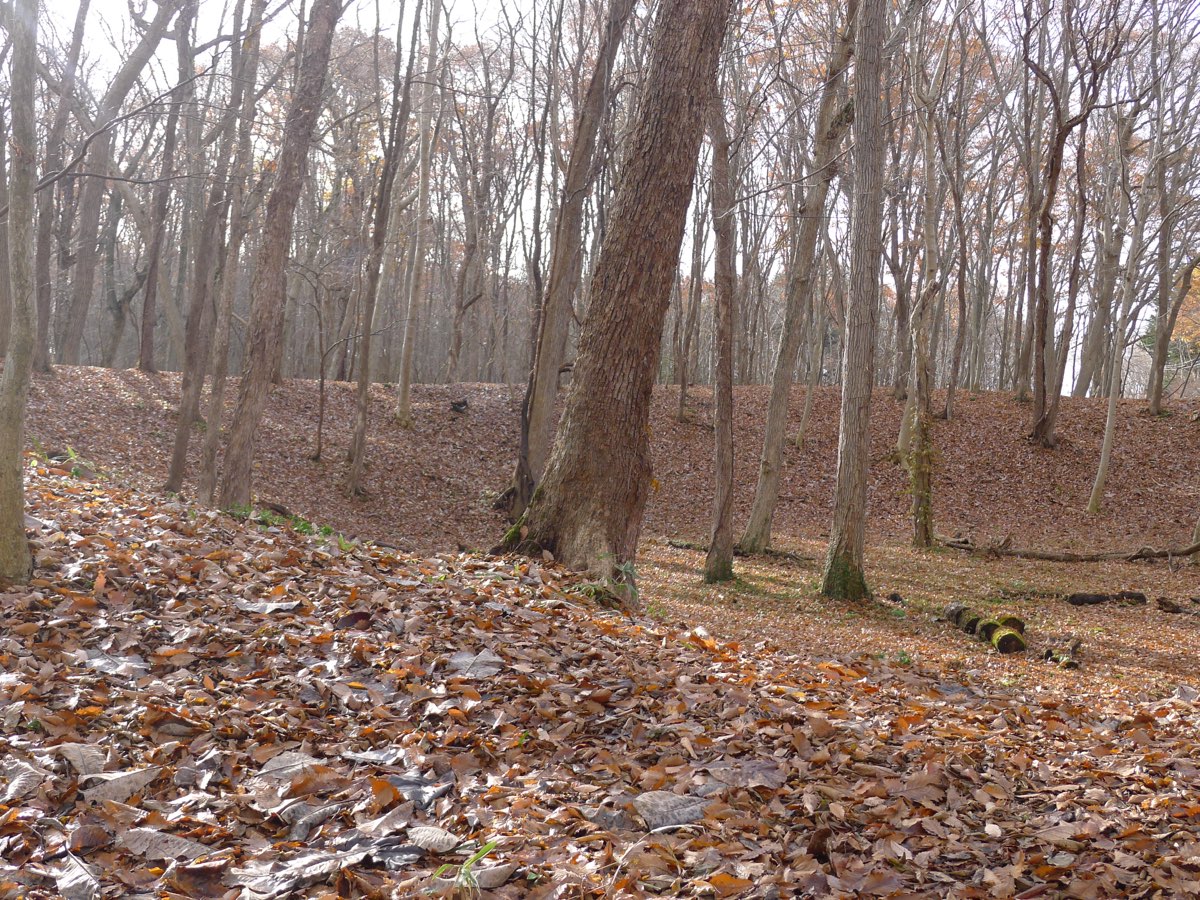
The Ofune site, in the Minamikayabe district of Hakodate, shows what a long-lived settlement could look like. It sits on a coastal terrace 30 to 50 meters above the Pacific, beside the Ofune River, with broadleaf forest behind it. The site was used from about 3,500 to 2,000 BCE.
Its residential area contains more than 100 pit dwellings, and more than 100 further pits, including graves and storage pits, lie to the southwest. Many of the dwellings were dug unusually deep, some more than two meters. One large dwelling was 2.4 meters deep, with six post holes and small stone-lined hearths.
Because the site was used over roughly 1,500 years, the figure of "more than 100 dwellings" most likely reflects remains that built up over time, not 100 houses standing at the same moment.
At Ofune, people also raised large earthen mounds. These yielded large amounts of pottery, stone tools, and scorched earth, which suggests rituals and ceremonies repeated over a long time. A burned whale vertebra found there points to rituals involving animals.
Food from sea and forest
The food remains at Ofune show how people used both the sea and the forest. They include the bones of whales, fur seals, tuna, and salmon, oyster shells, chestnuts and walnuts, wild grapes, and remains of the lacquer tree.
Kitakogane, in the city of Date on the shore of Uchiura Bay, tells a more sea-centered story. The site stands on a hill 10 to 20 meters above sea level and was used from about 5,000 to 2,000 BCE. Its shell mounds hold Orient clams, oysters, and scallops, along with the bones of tuna, flounder, fur seals, and whales.
These finds point to a livelihood built around fishing. The mounds and dwellings date from a time when the shoreline moved back and forth as sea levels rose and fell.
Not everything at Kitakogane was simply thrown away. One area combines a shell mound with graves, some containing human bones, and with remains of animal rituals such as arranged deer skulls.
Near a spring, people left large numbers of grinding stones and milling basins, thought to have been used to crush nuts. Most of them were broken, which suggests that the place was used to dispose of stone tools in a ritual way.
Caring for the dead
At Kakinoshima, in Hakodate, the remains span roughly 7,000 to 1,000 BCE. Here the settlement kept its residential area apart from its burial area, a sign that people distinguished everyday space from special space. In one large pit grave, archaeologists found ten clay tablets pressed with the footprints of children, placed as burial goods.
Around 2,000 BCE, people also built U-shaped mounds of earth about 190 meters long. According to the official World Heritage website, they are among the largest of their kind in Japan and were probably used for burial practices and rituals.
The Kiusu Earthwork Burial Circles, in Chitose, date from about 1,200 BCE. People dug out the ground and piled the earth into banks around groups of graves. There are nine circles, eight of which can still be recognized, and each measures at least 30 meters across.
The largest is 83 meters in outer diameter and 4.7 meters deep from the crest of the bank to the bottom of the pit. About 3,000 cubic meters of earth are estimated to have been moved. Many graves show traces of red pigment, an iron oxide known as Bengala, and some contain standing stones thought to have served as grave markers.
Interpretations differ
These remains show care, repeated practice, and shared labor. What they meant to the people who made them is harder to say. Many ritual objects of the period, such as clay figurines and sword-shaped stones, have been found, but their exact purposes are not known. They may have been used in rites for good hunting and safety, in memorials for ancestors, or as prestige goods, yet these remain suggestions rather than established facts.
Connections and a different timeline
The sea connected these communities as much as it separated them. Jōmon people transported jade, asphalt, and obsidian over long distances.
About 3,800 years ago, people on Rebun Island, at the northern edge of the Jōmon world, hunted sea lions and made ornaments of shell beads. According to the National Museum of Japanese History, they supplied these ornaments to many places in Hokkaido and Siberia.
Hokkaido's later history also followed its own course. The Jōmon culture there ended somewhat more than 2,000 years ago. Rice cultivation had by then spread through much of Honshu as far as Tohoku, but it did not cross the Tsugaru Strait to Hokkaido at that time.
Instead, the Hokkaido Museum describes a series of regional cultures. The Zoku-Jōmon, or Epi-Jōmon, culture lasted until about the 7th century. The Satsumon culture developed around the 7th to 8th centuries and continued until about the 12th century; its people fished and hunted and also grew foxtail millet and Japanese millet.
From as early as the 5th century, the Okhotsk culture, which came from Sakhalin, spread along the Okhotsk Sea coast and lasted until about the 9th century.
How the Jōmon, Zoku-Jōmon, Satsumon, and Okhotsk cultures relate to the Ainu people of later times is still being studied. One collaborative research project at the National Museum of Japanese History (fiscal 2022–2024), for example, examines the Okhotsk and Satsumon cultures in order to reconstruct how Ainu history developed from the ancient to the medieval period.
Visiting today
The four sites described here can be visited, and nearby facilities display their finds. The Hakodate Jomon Culture Center shows objects from Kakinoshima, Ofune, and other sites in Hakodate, and staff offer free guided tours in Japanese at both sites. At Kitakogane, an information center displays artifacts and a cross-section of a shell mound; it closes in winter, from December to March.
On the site itself, present-day shells have been spread over the ground to show how far the buried mound extends. For Kiusu, the official site lists the Chitose City Buried Cultural Properties Center as the facility for visitors.
What visitors see today is a protected site within a managed modern landscape, not an untouched scene from thousands of years ago. Opening hours and tour times change, so it is best to check the official World Heritage site before visiting.
Sources
- Learning about the Jomon Prehistoric Sites in Northern JapanJomon Prehistoric Sites World Heritage Promotion Headquarters
- About the Jomon periodJomon Prehistoric Sites World Heritage Promotion Headquarters
- Ofune SiteJomon Prehistoric Sites World Heritage Promotion Headquarters
- Kitakogane SiteJomon Prehistoric Sites World Heritage Promotion Headquarters
- Kakinoshima SiteJomon Prehistoric Sites World Heritage Promotion Headquarters
- Kiusu Earthwork Burial CirclesJomon Prehistoric Sites World Heritage Promotion Headquarters
- Hokkaido's Tale of 1.2 Million Years — Emergence of Hokkaido's Original CulturesHokkaido Museum
- The Jomon people in the northern Island — Cultural interchange beyond the seaNational Museum of Japanese History
- Reconstruction of the formation process of Ainu culture based on archaeological studyNational Museum of Japanese History