For about three hundred years, travelling merchants from Toyama carried medicine to households across Japan. They did not ask for payment when they left it. Instead, they came back later, checked what the family had used, and charged only for that.
Toyama Prefecture describes this home-medicine placement trade as a traditional industry going back to the Edo period, known for a distinctive method called senyō kōri, "use first, profit later." According to the prefecture, it spread throughout Japan and even overseas.
A medicine box in every home
The prefecture explains the system in five steps. A vendor first visits a household and leaves a box of medicines as the family's home supply. The family uses whatever it needs, when it needs it.
At regular intervals the vendor returns, checks how much has been used, and refills the box. Only then is the family charged, and only for the medicines it actually used. The prefecture says that its industry has developed by valuing this idea.
Toyama City describes the same method: the medicine is left in the home first, and the price of what was used is collected later. The city says that, sold this way, Toyama's medicines have long been used in homes all over Japan.
A founding story and a famous pill
How did it begin? Toyama Prefecture writes that the origin is "generally said" to lie with Maeda Masatoshi, the second lord of the Toyama domain. In this account, he received the recipe for a medicine called Hangontan from Mandai Jōkan, a doctor from Okayama, in 1683.
The story continues in 1690. Inside Edo Castle, a daimyo was seized by stomach pain, and Masatoshi gave him Hangontan, which cured him at once.
Seeing this, other lords asked Masatoshi to sell Hangontan widely, and this is "said to be" the start of Toyama's placement trade. Toyama City likewise says the trade is said to have begun when Masatoshi encouraged it as an industry of his domain.
The prefecture presents this as a tradition, and its own official history adds some context. A History of the Toyama Pharmaceutical Industry, compiled by the prefecture and published in 1987, says that Hangontan was the representative medicine that Toyama peddlers carried. Until the Meiji period they were even called "Hangontan sellers."
Yet the same history notes that Hangontan was not originally Toyama's own invention. The name appears in much older texts, and an Edo-period shopping guide to the city lists five shops in Edo selling medicines of that name.
Later lords of Toyama also took an interest in medicine. According to Toyama City, the tenth lord, Maeda Toshiyasu (1800–1859), studied herbal medicine himself and wrote a 92-volume work on the subject.
Ledgers, groups and long journeys
The prefectural history describes how the business was organized. As a rule, peddlers set out twice a year, in spring and autumn. The prefecture adds that, in an age without modern transport, they carried their medicines on foot in wicker trunks.
The key tool was the kakebachō, a ledger made for each sales area. Every customer had an account in it, recording the dates of visits, the names and amounts of the medicines left, their prices, and the payments. Some ledgers also included sketch maps of the neighbourhood.
According to the history, turning the pages helped a peddler recall each family and its house, find each customer, and predict which medicines would be needed before the next visit. The history explains that the ledgers had a value like a shop's goodwill. They were bought and sold, and inherited.
In the Meiji period, the history adds, a ledger could even be used as security for a loan; it cites the 123rd National Bank, the forerunner of today's Hokuriku Bank. The peddling trade was also organized into groups, called kumi, each covering a broad region of Japan.
The history says these groups were formed around the Meiwa era (1764–1772), with 18 at first, 20 in the Bunka era and 22 in the Ansei period (1854–1860). Citing a ledger from 1853, it gives their sizes: the Kanto group had 381 members, the largest, followed by the Gokinai group with 261. The smallest included the Satsuma group with 26, the Akita group with 21 and the Hida group with 18.
Trading across domain borders
Travelling to another domain in the Edo period was, as the history puts it, like going to a foreign country. Toyama's peddlers were treated as foreign merchants and needed a licence from each domain to sell there. Gifts and payments to domain officials were part of keeping that permission.
In the later Edo period, many domains tried to limit goods coming from outside, and the peddlers were repeatedly banned from trading. Satsuma, in the far south, was especially wary of outsiders.
According to the history, the 26-member Satsuma group overcame this by carrying kelp from Matsumae, at the northern end of Japan, all the way to Satsuma. The history calls it trade on an astonishing scale.
Peddlers also built trust with ordinary customers. The prefecture says they brought woodblock prints and paper balloons as gifts at a time when there was little other entertainment. The Agency for Cultural Affairs notes that Toyama medicine became known nationwide from around the later Edo period because of its distinctive peddling method.
From the Meiji period to today
After the Meiji Restoration, Western learning spread quickly, and traditional medicines faced severe criticism. The prefectural history names the scholar Fukuzawa Yukichi as a representative critic. His essay on patent medicines, included in a collection of his writings published in August 1879, took a negative view from the outset.
Even so, the history says the trade developed further during the Meiji period, until Toyama was called the foremost name in patent medicine in Japan. A table in the history shows Toyama's share of the national tax on patent medicines at 18.1 percent in 1883 and 25.8 percent in 1887.
The prefecture says that capital from the medicine trade was used to found banks and electric power companies. Education also mattered. About 300 years ago, terakoya where the knowledge needed for peddling was taught spread, and about 100 years ago a pharmacy school was founded that is now part of the University of Toyama.
The prefecture's 2026 guide describes the industry today. About 80 pharmaceutical makers and more than 100 plants are in Toyama. In 2024, national production of placement medicines was worth 2.09 billion yen, and Toyama accounted for about 60 percent of it.
In July 2007, "Toyama no Kusuri" (Toyama's Medicine) was approved for registration as a collective trademark, after an application by the Toyama Pharmaceutical Association. The prefecture says the placement system is still widely used, in offices as well as homes.
Visiting today
In 1981, 1,818 tools of the Toyama medicine trade were designated an Important Tangible Folk Cultural Property. They are kept at the Toyama Municipal Folk Craft Village in Anyōbō, Toyama City. They include medicine-making tools, peddling and travel gear, kakebachō ledgers, wicker trunks, and small portable Buddhist images that peddlers carried to pray for a safe journey.
The prefecture's 2026 guide lists several places where this history can be seen. The Toyama City Baiyaku Museum (Anyōbō, Toyama City) displays peddling tools, equipment for making medicine, and souvenirs such as woodblock prints.
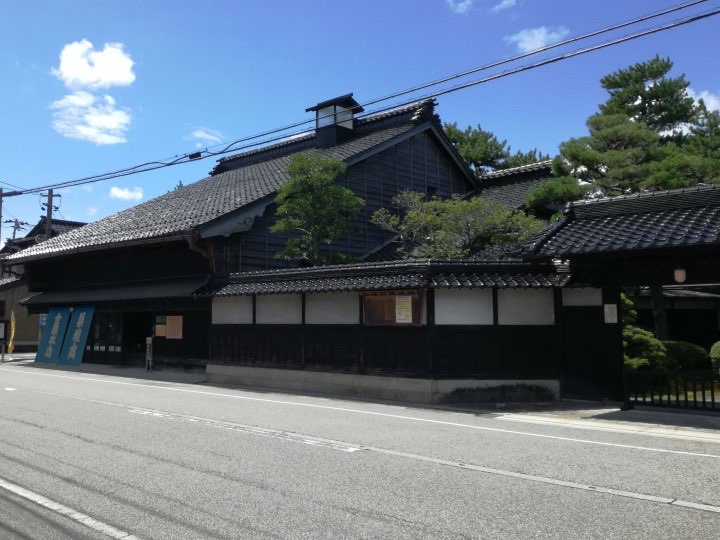
Kanaoka-tei, an annex of the Toyama Prefectural Civic Hall, exhibits materials on the trade; its main house is an early-Meiji merchant building that keeps the remains of a medicine wholesaler's shop. The Namerikawa City Museum, in an area where the trade is especially active, also shows medicine-trade materials.
In central Toyama, a statue of Maeda Masatoshi stands in Toyama Castle Park, and a monument to the medicine peddlers stands at the south exit of Toyama Station. Opening days and hours change, so check each facility's official website before you go.
Sources
- 富山県薬業史Toyama Prefecture
- くすりの富山県(PHARMACEUTICAL INDUSTRY IN TOYAMA)令和8年5月版富山県厚生部くすり振興課(Toyama Prefecture)
- 富山県薬業史 通史 第一章 富山売薬業の形成富山県(Toyama Prefecture; 監修 植村元覚)
- 富山県薬業史 通史 第二章 江戸時代の富山売薬業(第一~三節)富山県(Toyama Prefecture; 監修 植村元覚)
- 富山県薬業史 通史 第二章 江戸時代の富山売薬業(第四~六節)富山県(Toyama Prefecture; 監修 植村元覚)
- 富山県薬業史 通史 第三章 明治時代の富山売薬業富山県(Toyama Prefecture; 監修 植村元覚)
- 富山の売薬用具(文化遺産オンライン/国指定文化財等データベース)文化庁(Agency for Cultural Affairs)
- とやまの和漢薬情報(富山の家庭薬の伝統・由来の解説/家伝薬の紹介)富山市(Toyama City, 商工労働部コンベンション・薬業物産課)