In Japanese, setomono, "Seto things," became a byword for ceramics. The name comes from Seto, a city in Aichi Prefecture where glazed pottery has been made since the Heian period. On the Chita Peninsula in the same prefecture, the city of Tokoname traces its pottery back to the late Heian period too.
Both belong to the Six Ancient Kilns of Japan. This article follows what the two towns made and where their history can be seen today.
The Six Ancient Kilns
According to the Japan Heritage portal of the Agency for Cultural Affairs, the wares of Seto, Echizen, Tokoname, Shigaraki, Tamba and Bizen are called the Six Ancient Kilns of Japan. In each of these towns, pottery-making has continued from medieval times to the present.
The portal explains that Seto made glazed ware, while the other five made unglazed, high-fired ware known as yakishime.
Seto: the glazed ware
Aichi Prefecture says Seto had two natural advantages. Good clay for pottery could be dug there, and pine and other trees covered the hills, and this natural setting supported the growth of the ceramic industry.
According to the prefecture, from the late Heian period Seto produced glazed pottery called Koseto ("old Seto"), modelled on Chinese ceramics. Until the Muromachi period, it says, Seto was the only place in Japan producing glazed pottery.
The prefecture also records a tradition: Seto ware is said to have begun when Katō Shirozaemon Kagemasa, who had learned pottery techniques in China, opened a kiln in Seto in the Kamakura period.
Interpretations differ
The sources describe the beginnings differently. The Japan Heritage text says that Seto carried on the tradition of the Sanage kilns and was producing glazed ware in the south of present-day Seto by the late tenth century, while the prefecture dates Koseto to the late Heian period.
According to Seto City, 885 kiln sites dating from the Heian period to the present have been confirmed within the city.
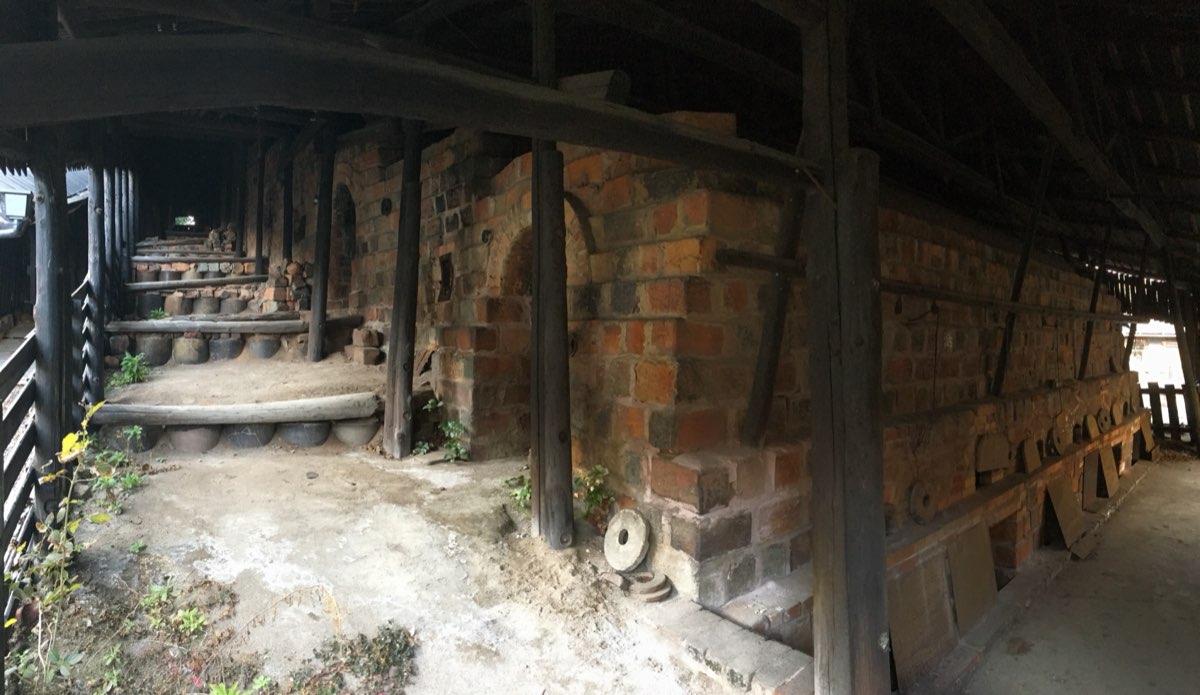
One of them, the Konagaso kiln, operated from the end of the fourteenth century into the early fifteenth century and produced Koseto in the Muromachi period. The city says fine tea caddies have been excavated there, and that a record completed in 1788 shows the kiln was fired again in Genroku 12 (1699). The site is now a national historic site, with the kiln protected under a shelter.
The Japan Heritage text describes Seto as a major brand of ceramics for the tea ceremony, whose name later became setomono, a general word for ceramics.
Seto turns to porcelain
According to the prefecture, porcelain production also began in Seto in the late Edo period, and making both pottery and porcelain is one of the features of Seto ware.
An essay published by Seto City and written by Hattori Fumitaka, director of the Seto City Art Museum, gives more detail. Porcelain production in Japan began in Arita, in Kyushu, in the early seventeenth century. Seto followed about 200 years later, from the Kyōwa era (1801–1804).
In Seto the older pottery came to be called hongyō-yaki, "the original work," and the new porcelain shinsei-yaki or sometsuke-yaki. Until then, Hattori writes, only eldest sons who headed their households could run pottery kilns, but second and third sons could open porcelain kilns. Porcelain soon overtook pottery and became the representative ware of Seto.
Interpretations differ
The long-held view credited Katō Kumehachi, who learned porcelain-making from a craftsman who had fled from Hizen, and his nephew Katō Tadaharu with a trial firing in Kansei 1 (1789). Hattori notes that histories compiled in the Meiji and Taishō periods do not record this, and that they instead describe trials in the Kyōwa era by several people, including Tsugane Bunzaemon, the Owari domain's magistrate at Atsuta, and Katō Kichizaemon and his son Minkichi. In his words, who truly founded Seto porcelain remains a mystery.
In the story usually told about Minkichi, he and his father first produced imperfect white porcelain in Kyōwa 1 (1801), and Minkichi then went to Hizen in 1804 to learn more advanced methods. He returned in Bunka 4 (1807) after three years and four months, bringing techniques for refining clay, mixing glazes and firing in a round kiln, and he came to be enshrined as Seto's "ancestor of porcelain."
According to Hattori, sixteen households converted to porcelain in 1801, twenty-eight more followed in 1804, and by Bunsei 5 (1822) the village of Seto had 91 workshops making blue-and-white porcelain. He adds that almost no surviving piece can be confirmed as the work of the first Minkichi.
Tokoname: the great jars
Aichi Prefecture writes that Tokoname's origins go back to the late Heian period, and that since ancient times it has been known for large jars and other everyday wares.
The local tourism association explains why the area suited pottery. The soft soil and gentle hills made it easy to dig anagama, tunnel-shaped kilns built on a slope; good clay was plentiful; and the sea was close, so finished goods could be shipped. It dates the beginning of Tokoname ware to the early twelfth century and says Tokoname is considered the oldest and, at the time, the largest of the six kilns.
According to the association, by the fourteenth century Tokoname potters were building large storage jars and cooking vessels by coiling ropes of clay, and larger kilns appeared in the late fifteenth century. The jars were put to many practical uses, such as brewing sake.
According to the Japan Heritage text, Tokoname's influence reached other kilns. It says that in medieval times kilns making yamajawan bowls spread from Shizuoka to Mie and north to near Takayama in Gifu, and that Tokoname was a major force among them. Under its strong influence, it says, Echizen began in the late twelfth century, Tamba in the thirteenth century and Shigaraki in the late Kamakura period.
Teapots, kilns and pipes
The prefecture writes that tea utensils were made in the Momoyama period, and that in the Edo period potters used the local iron-rich clay to make shudei, hakudei and hiiro ("fire-coloured") wares, laying the foundation of Tokoname ware today. Red shudei, which takes its colour from the iron in the clay, is well known as representative of Tokoname ware.
The tourism association adds that Tokoname's signature red-clay teapots arose in the mid-nineteenth century from a technique brought from Yixing in China.
Kilns changed as well. Tokoname City says climbing kilns spread after Koie Hōkyū and his son Koie Hōju introduced them in the late Edo period, and that they are said to have removed uneven firing and raised efficiency. The tourism association dates Tokoname's oldest climbing kiln to around 1830.
According to the association, Tokoname began making ceramic toilets in the 1850s, and as Japan rapidly modernised in the late nineteenth century, roof tiles and water and sewer pipes. Figurines followed from the late 1930s, and by 1950 Tokoname produced more maneki-neko, the beckoning cat figures, than anywhere else in Japan; production peaked in the 1950s, with several hundred kilns.
Tokoname City describes the Tōei kiln, a climbing kiln built in Meiji 20 (1887), with eight firing chambers on a slope of about 20 degrees. The city calls it the largest surviving kiln of its type in Japan. It stopped after its last firing was unloaded in January 1974, and it is now the only climbing kiln left in Tokoname.
Visiting today
In Seto, the Setogura Museum, run by the city's cultural foundation, recreates the old Owari-Seto station and displays a car of the Setoden railway, expected to carry ceramics in bulk. It also has a reconstructed pottery workshop and a coal-fired kiln of the kind used from the early twentieth century to the Shōwa 30s (1955–1964), with a chimney about 9 metres high.
The Aichi Prefectural Ceramic Museum, also in Seto, opened in 1978 in an area known for the Sanage ancient kilns. It describes itself as Japan's largest museum specialising in ceramics. As of October 2026 its website showed the museum open with exhibitions running, including a display of an excavated kiln site.
In Tokoname, according to the tourism association, the Pottery Footpath (Yakimono Sanpomichi) has two walking courses that start at the Tokoname Ceramics Hall: Course A, about 1.6 km, and Course B, about 4 km. On Dokanzaka slope, one wall is lined with railway pipes made in the late Meiji period and the other with early-Shōwa shōchū bottles.
On Course B, according to the tourism association, the museum at Tokoname Tou no Mori shows Tokoname ware from across the centuries with detailed English explanations.
At the INAX Live Museum, run by LIXIL, the Kiln Plaza and Museum preserves a square kiln from the Taishō period that fired earthenware pipes, with a red-brick chimney 21 metres high. Tokoname City says it is open to the public, and that the 300 to 400 red chimneys that once stood in the town are a symbol of Tokoname ware.
Opening days and exhibitions change, so check official websites before you visit.
Sources
- きっと恋する六古窯―日本生まれ日本育ちのやきもの産地―(日本遺産ポータルサイト ストーリー)Agency for Cultural Affairs (Japan Heritage portal)
- 瀬戸焼(あいちの地場産業)Aichi Prefecture
- 常滑焼(あいちの地場産業)Aichi Prefecture
- 瀬戸窯跡、小長曽陶器窯跡(日本遺産ポータルサイト 構成文化財)Seto City (text in the Agency for Cultural Affairs Japan Heritage portal; 文責 瀬戸市役所ものづくり商業振興課)
- 初期瀬戸染付の謎とは(初期染付・民吉に係る論考集)Seto City (瀬戸市; essay by the director of the Seto City Art Museum)
- 登窯(陶栄窯)(日本遺産ポータルサイト 構成文化財)Tokoname City (text in the Agency for Cultural Affairs Japan Heritage portal; 文責 常滑市経済振興課)
- 窯のある広場・資料館(日本遺産ポータルサイト 構成文化財)Tokoname City (text in the Agency for Cultural Affairs Japan Heritage portal; 文責 常滑市経済振興課)
- 常滑焼(観光庁 地域観光資源の多言語解説文データベース R5-00620)Tokoname Tourism Association (一般社団法人とこなめ観光協会; text in the Japan Tourism Agency multilingual database)
- やきもの散歩道(観光庁 地域観光資源の多言語解説文データベース R5-00621)Tokoname Tourism Association (一般社団法人とこなめ観光協会; text in the Japan Tourism Agency multilingual database)
- とこなめ陶の森 資料館(観光庁 地域観光資源の多言語解説文データベース R5-00615)Tokoname Tourism Association (一般社団法人とこなめ観光協会; text in the Japan Tourism Agency multilingual database)
- 瀬戸蔵ミュージアム 館内のご案内Seto City Cultural Promotion Foundation (公益財団法人 瀬戸市文化振興財団)
- 愛知県陶磁美術館について 基本理念Aichi Prefectural Ceramic Museum (愛知県陶磁美術館)
- 愛知県陶磁美術館 トップページ(開館情報・展覧会情報)Aichi Prefectural Ceramic Museum (愛知県陶磁美術館)