Mount Fuji, a stratovolcano with an elevation of 3,776 meters, rises on the border of Yamanashi and Shizuoka prefectures. Today it is famous as a symbol of Japan, but for many centuries it has also been a mountain of faith. The Agency for Cultural Affairs explains that because Fuji erupted again and again from ancient times, many people revered it with awe as a sacred mountain.
In 2013 Fuji was inscribed on the World Heritage List not as a natural site but as a cultural one, under the name "Fujisan, Sacred Place and Source of Artistic Inspiration." This article follows the religious side of that story: worship from afar, ascetics on the summit, the great pilgrim associations of the Edo period, and the changes that came with modern Japan.
Worshipping a burning mountain from afar
According to the Yamanashi Prefectural Fujisan World Heritage Center, the oldest record of Fuji's eruptions dates back to the eighth century. At that time, people worshipped the mountain by looking up at it from its foot, a form of devotion called yōhai. To pray to the fire deity Asama no Ōkami to calm the fire, they founded Sengen shrines at the foot of the mountain in the provinces of Kai (Yamanashi) and Suruga (Shizuoka).
On the southern side, the Agency for Cultural Affairs describes Fujisan Hongū Sengen Taisha as a shrine founded to worship Asama no Ōkami, thought to dwell at the bottom of the summit crater, and to calm the eruptions. It is said to be the head shrine of the many Sengen shrines across Japan. In the mid-ninth century, the imperial court in Kyoto gave the shrine a divine rank and raised it step by step, seeking to soothe Asama no Ōkami and calm the eruptions.
Interpretations differ
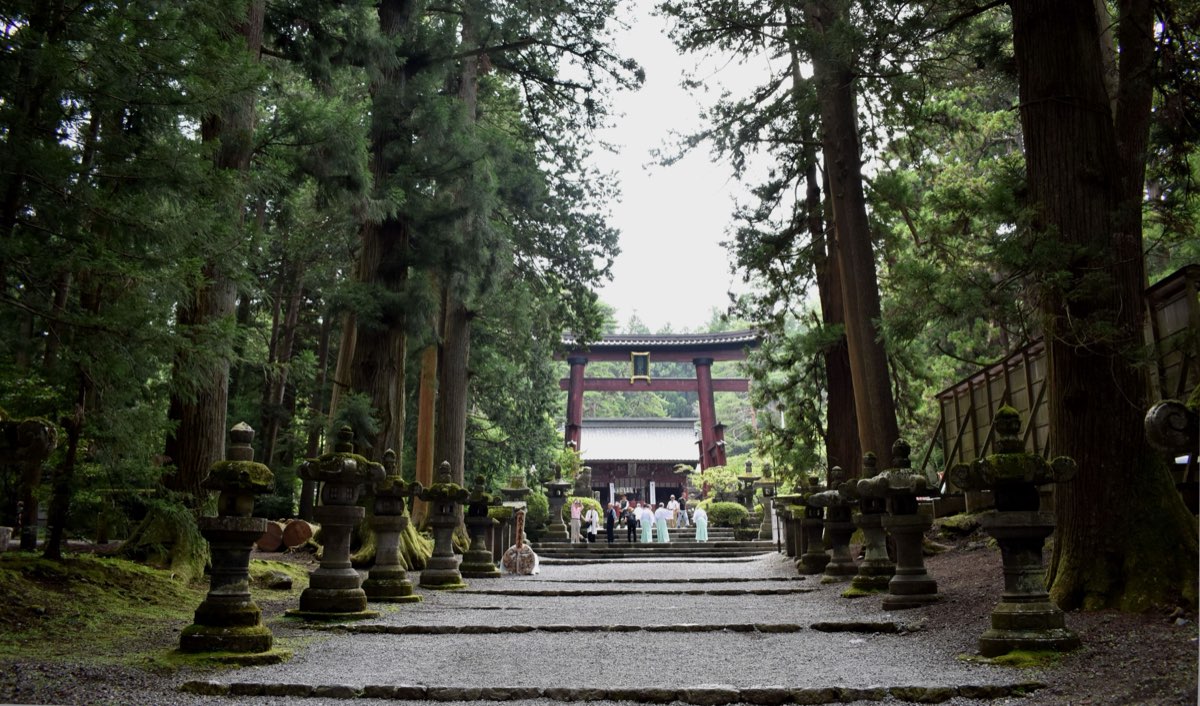
On the northern side, Kitaguchi Hongū Fuji Sengen Shrine in Fujiyoshida tells its own history. According to the shrine, after an eruption in 781 the governor of Kai consulted divination, and in 788 a shrine hall was built on its present site. The shrine adds that in ancient times entering a high mountain like Fuji was taboo, so its grounds were a place to worship the mountain from a distance.
Ascetics on the summit
When the volcanic activity quieted down in the later Heian period, Fuji became, in the words of Yamanashi Prefecture, a training ground for Shugendō, a practice that blended Japan's ancient mountain worship with esoteric Buddhism. Ascetics began to climb to the summit to worship, a practice called tohai.
An early figure named in these sources is the ascetic Matsudai, active in the first half of the twelfth century. Yamanashi Prefecture writes that he built a temple called Dainichiji on the summit. The prefectural Fujisan World Heritage Center adds that Matsudai climbed Fuji more than one hundred times and opened Fujisan Kōbōji, a temple in present-day Shizuoka, starting a group known as Fuji Shugen.
According to the Agency for Cultural Affairs, Kōbōji, today's Murayama Sengen Shrine and its Dainichidō hall, is said to have been founded by Matsudai. In the early fourteenth century the monk Raison organized the Fuji ascetics, and Kōbōji grew into their center.
Ordinary believers followed. The center states that from the fourteenth century commoners called dōja climbed the mountain in the hope of rebirth in paradise, and that guides called oshi grew active in leading and caring for them. Yamanashi Prefecture dates the start of commoners' climbing, alongside the ascetics, to the later Muromachi period, and the Agency notes more dōja climbing in the fifteenth and sixteenth centuries, guided by ascetics.
Kakugyō and the Fuji-kō
Interpretations differ
According to Yamanashi Prefecture, Hasegawa Kakugyō, who appeared during the Warring States period, is believed to have organized a new form of Fuji faith into a body of doctrine. His name is tied to Hitoana, a cave at the western foot of the mountain.
Interpretations differ
According to documents of the Fuji-kō cited by the Agency for Cultural Affairs, Kakugyō practised in the cave in the sixteenth and seventeenth centuries, for example standing on the end of a squared timber for 1,000 days, and received a revelation from Asama no Ōkami. He is said to have died there. About 230 stone monuments raised by Fuji-kō believers remain around the cave.
Kakugyō's teaching passed to his disciples. Yamanashi Prefecture writes that in the mid-Edo period it became hugely popular, mainly in the Kanto region, as the Fuji-kō, and many people climbed Fuji and made pilgrimages to sacred places such as the Fuji Five Lakes.
The World Heritage Committee's statement, in a provisional Japanese translation by the Agency for Cultural Affairs and the two prefectures, describes two types of pilgrims: those led by mountain ascetics and, more numerous, members of the Fuji-kō from the seventeenth century. Pilgrims with long staffs set out from the Sengen shrines and climbed to the crater, regarded as the abode of Asama no Ōkami, and walked around its rim.
The statement adds that as pilgrimage became more popular from the eighteenth century, trails were opened and huts prepared. Lakes and springs at the foot of the mountain were used by pilgrims to purify themselves in cold water before the climb, and a circuit of eight lakes, including the Fuji Five Lakes, became a ritual for many Fuji-kō members.
At Oshino Hakkai, eight springs fed by Fuji's underground water, a pilgrimage circling the springs began in 1843. The Agency explains that it was inspired by a tradition that Kakugyō had done water austerities at lakes at the foot of Fuji.
The oshi of Yoshida
Pilgrims needed places to stay. According to the Agency for Cultural Affairs, oshi looked after Fuji-kō members during their summer climbs, providing lodging, meals and every other need, and at other times spread the faith and performed prayers. The oshi of Yoshida formed a large settlement in front of Kitaguchi Hongū Fuji Sengen Shrine, the starting point of the Yoshida trail.
The former Togawa house, built in 1768, is the oldest surviving oshi house. Around 1860, as the number of Fuji-kō visitors rose sharply, a detached room with a shrine was added to it.
Kakugyō's followers also supported the shrine itself. Kitaguchi Hongū Fuji Sengen Shrine says that Murakami Kōsei, a leader of the Murakami-kō in Kakugyō's line, carried out a major rebuilding from 1733 to 1738, and that most of its present buildings and layout date from that work.
According to the shrine's website (undated; read in 2026), the oshi once numbered 86 households. Today about 40 belong to the oshi association, but only five still receive kō groups and work as oshi. The shrine says the Fuji-kō continues to hold rituals and summer climbs.
Change in the Meiji era and after
The nineteenth century brought great change. The prefectural center writes that Fuji faith became increasingly Shinto in form, and many Buddhist statues placed around the mountain were removed. At Murayama, the Agency for Cultural Affairs notes that the 1868 order separating Shinto and Buddhism abolished Kōbōji, and that in 1872 Shugendō was banned and most ascetics returned to lay life, although some continued their activities until the 1940s.
The same period saw the lifting of the ban on women's pilgrimage. Yamanashi Prefecture writes that in the Meiji era women were allowed to climb to the summit, and that railways and roads brought many more climbers. In the twentieth century, according to the center, visitors came from Japan and abroad, and their reasons for climbing became more varied.
A cultural World Heritage site
Fuji was not inscribed as natural heritage. According to the Yamanashi center, Fuji was dropped from the list of candidates for World Natural Heritage in 2003; the center's chronology then records steps toward World Cultural Heritage from 2005. In April 2013 ICOMOS recommended inscription without Miho no Matsubara, a pine-covered shore, but on June 22, 2013 the World Heritage Committee decided to inscribe the property including it.
The inscribed property has 25 components in Yamanashi and Shizuoka, including the mountain area with its trails, Sengen shrines, two oshi houses, lakes, springs, and Hitoana. The committee's statement says the awe inspired by Fuji's form and volcanic activity was transformed into religious practices that linked Shinto and Buddhism, people and nature.
Visiting today
The Yamanashi Prefectural Fujisan World Heritage Center in Fujikawaguchiko opened its South Building on June 22, 2016. Its exhibits present the forms of Fuji faith, including climbing to worship, pilgrimage to sacred sites, and worship from afar.
Kitaguchi Hongū Fuji Sengen Shrine in Fujiyoshida publishes access information and a map of its grounds for visitors as of 2026. In summer, according to the two prefectures' heritage council, many people still climb to greet the sunrise from the summit and walk around the crater. Check each official website before you go.
Sources
- 富士山―信仰の対象と芸術の源泉(世界遺産)Agency for Cultural Affairs (文化遺産オンライン)
- 富士山と信仰Yamanashi Prefecture
- 村山浅間神社(世界遺産「富士山」構成資産)Agency for Cultural Affairs (文化遺産オンライン)
- 富士山の「顕著な普遍的価値の言明」(第37回世界遺産委員会決議 37 COM 8B.29 の仮訳)Fujisan World Cultural Heritage Council (富士山世界文化遺産協議会, Yamanashi and Shizuoka prefectures)
- 富士山の顕著な普遍的価値Fujisan World Cultural Heritage Council (富士山世界文化遺産協議会, Yamanashi and Shizuoka prefectures)
- 経緯(世界遺産登録までの道のり)Fujisan World Cultural Heritage Council (富士山世界文化遺産協議会, Yamanashi and Shizuoka prefectures)
- Home (Fujisan World Cultural Heritage Council, English)Fujisan World Cultural Heritage Council (富士山世界文化遺産協議会, Yamanashi and Shizuoka prefectures)
- 世界遺産登録までのあゆみYamanashi Prefectural Fujisan World Heritage Center (山梨県立富士山世界遺産センター)
- 信仰の対象・芸術の源泉Yamanashi Prefectural Fujisan World Heritage Center (山梨県立富士山世界遺産センター)
- 南館(センターについて)Yamanashi Prefectural Fujisan World Heritage Center (山梨県立富士山世界遺産センター)
- 富士山本宮浅間大社(世界遺産「富士山」構成資産)Agency for Cultural Affairs (文化遺産オンライン)
- 御師住宅(旧外川家住宅・小佐野家住宅)(世界遺産「富士山」構成資産)Agency for Cultural Affairs (文化遺産オンライン)
- 忍野八海(世界遺産「富士山」構成資産)Agency for Cultural Affairs (文化遺産オンライン)
- 人穴富士講遺跡(世界遺産「富士山」構成資産)Agency for Cultural Affairs (文化遺産オンライン)
- 由緒(北口本宮冨士浅間神社)Kitaguchi Hongū Fuji Sengen Shrine (北口本宮冨士浅間神社)
- 富士講と御師(北口本宮冨士浅間神社)Kitaguchi Hongū Fuji Sengen Shrine (北口本宮冨士浅間神社)
- 交通案内(北口本宮冨士浅間神社)Kitaguchi Hongū Fuji Sengen Shrine (北口本宮冨士浅間神社)