Minamata disease is a poisoning of the nervous system caused by eating fish and shellfish contaminated with methylmercury released from factories. It is neither contagious nor inherited. Mothers who ate contaminated fish during pregnancy could also pass the poison to their unborn children, and some were born with what is called fetal Minamata disease.
The disease was officially confirmed in Minamata, a city in southern Kumamoto Prefecture, on May 1, 1956. This article follows the search for the cause, the delayed response, the lawsuits and how the city passes on its lessons.
A factory town by the sea
According to Minamata City, the company that later became Chisso was founded in 1908, and the small village of Minamata grew with it into one of Kumamoto's industrial cities. From 1932 to 1968 the factory used inorganic mercury as a catalyst in making acetaldehyde, a raw material for chemicals and plastics. Methylmercury formed in this process was released into the sea in large quantities, according to the city's museum almost untreated until 1966.
The methylmercury built up in fish and shellfish through the food chain. Contaminated fish looked normal, and people who ate a great deal of it fell ill.
Minamata City says that from around 1950, shellfish began to die in Minamata Bay, fish floated on the surface, and cats along the shore went mad and died.
Official confirmation, 1956
In April 1956, a girl from the Tsukinoura district who could not speak or eat was admitted to the hospital attached to Chisso's Minamata factory. On May 1, the hospital director reported to the Minamata public health center that a disease of unknown cause with brain symptoms had appeared and that patients had been admitted. The Ministry of the Environment calls this the "official confirmation of Minamata disease."
According to the National Institute for Minamata Disease, the first patients officially reported were two sisters, aged five and two. By the end of that year, 54 patients had been found, and 17 of them had already died. Later research identified a girl who fell ill in 1953 as the first patient.
At first nobody knew the cause. Minamata City records that the illness was feared as contagious, that patients' houses were disinfected, and that neighbors shunned patients.
A cause found, a response delayed
By March 1957, a Ministry of Health and Welfare research group suspected poisoning from fish and shellfish caught in Minamata Bay. When Kumamoto Prefecture asked whether the Food Sanitation Act could be used to ban fishing, the ministry said no, as there was no clear evidence that all fish and shellfish in the area concerned were toxic.
In September 1958, Chisso rerouted wastewater from its acetaldehyde process, which had flowed into Minamata Bay, so that it passed through a settling pool and was released at the mouth of the Minamata River. From the following March, new patients appeared near the river mouth and to the north.
In July 1959, the Kumamoto University research group reported that it had come to think the cause was a mercury compound, particularly organic mercury.
In December 1959, Chisso completed a wastewater treatment device, but the Ministry of the Environment notes that it had no effect on methylmercury. On December 30, Chisso and an association of patients' families signed a "sympathy money" contract stating that no further compensation would be demanded even if the factory's wastewater were later found to be the cause.
The contract paid, among other things, annual sums of 100,000 yen to adults and 30,000 yen to minors. Minamata City's booklet calls the payments extremely low even for that time. With these steps, the Ministry says, the Minamata problem was brought to a social end while still unresolved.
Chisso stopped making acetaldehyde in May 1968. On September 26, 1968, the government announced its official view that the disease in Kumamoto was caused by a methylmercury compound formed in the acetaldehyde process at Chisso's Minamata factory.
The Ministry of the Environment states that by around November 1959 the authorities could have recognized that organic mercury from Chisso was the likely cause, yet they could not prevent the damage from spreading. It adds that concern for the local economy and Japan's rapid growth is thought to have been in the background.
The first lawsuit and the 1973 ruling
On June 14, 1969, 112 patients and family members from 28 households sued Chisso for damages in the Kumamoto District Court.
On March 20, 1973, the court ruled in the plaintiffs' favor, and the ruling became final. According to Minamata City, the court found that the Chisso Minamata factory had neglected the duty of care required of a synthetic chemical plant. The city also records that the ruling declared the 1959 contract void as contrary to public order and morals.
After further negotiations, a compensation agreement was signed on July 9, 1973. Certified patients were to receive lump sums of 16, 17 or 18 million yen in three ranks, along with medical costs and pensions, and patients certified later could also choose to be covered.
Relief and the responsibility of the state
Patients are certified under a legal system that began in December 1969. The Ministry of the Environment notes that some people criticize the medical conditions for certification set out in 1977 as too narrow.
Under a political settlement in 1995, companies paid a lump sum of 2.6 million yen to people who met certain conditions, and the national and prefectural governments were to express regret or take some other responsible stance. 11,152 people received medical cards. The prime minister's statement that December said that, although the government believed it had done what it could at each stage, it must frankly reflect that, as a result, it had taken a long time to determine the cause and deal properly with the company.
On October 15, 2004, the Supreme Court ruled in the Kansai lawsuit, the one case that had continued, that the national government and Kumamoto Prefecture were liable for failing to use their regulatory powers to prevent the disease from spreading from January 1960 onward.
That day, the Minister of the Environment said he sincerely reflected on the failure to prevent the damage from spreading, and that he was truly sorry to the many people who had been forced to suffer for many years.
A special measures law for relief was passed in July 2009. In Kumamoto and Kagoshima, 45,933 people applied for relief under it by July 2012, and 36,361 were found eligible.
Lawsuits continue. According to the prefecture and the Ministry of the Environment, the Osaka District Court upheld the claims of 128 plaintiffs in 2023. In 2024 the Kumamoto District Court rejected the claims of 144 plaintiffs; it found that 25 of them had the disease but applied a 20-year time limit. Both rulings were appealed.
By the end of December 2024, 3,000 people had been certified as Minamata disease patients in Kumamoto, Kagoshima and Niigata, including 1,791 in Kumamoto Prefecture. Of the 3,000, 304 were still living.
Discrimination and "moyai-naoshi"
The Ministry of the Environment notes that, with the company and the patients in the same town, the community found it hard to face the problem, and that people from Minamata faced prejudice elsewhere. Minamata City adds that false rumors spread that some applicants were "fake patients."
From 1990 to 1998, Kumamoto Prefecture and Minamata City carried out a project to restore ties in the community. Through it grew "moyai-naoshi": moyai means the ropes that tie boats together, or shared work, and the term means facing the disease openly and working together through dialogue.
Since 1992, a memorial service for the victims has been held every year on May 1. In 2010, Hatoyama Yukio became the first prime minister to attend it.
In October 2013, a diplomatic conference in Kumamoto adopted the Minamata Convention on Mercury, which entered into force on August 16, 2017. Minamata City notes that its preamble refers to the important lessons of Minamata disease.
Places to visit
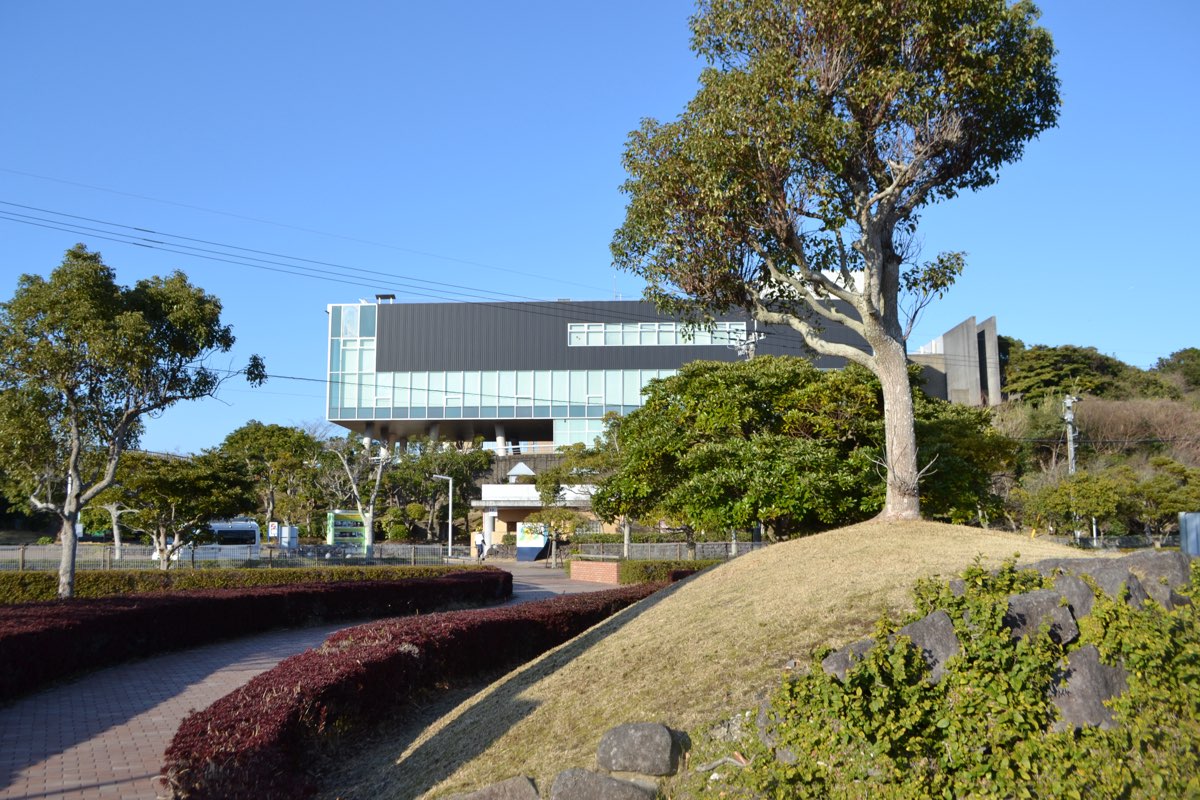
Minamata Disease Municipal Museum* (Minamata City). Opened in January 1993, it presents the disease through panels, photographs and video and receives about 40,000 visitors a year. Admission is free.
Storyteller talks by patients, their families and others involved can be booked by groups of ten or more. It shares a hill with the Minamata Disease Archives and a prefectural environmental center. Please check the official website for opening hours.
Eco Park Minamata*. Between 1977 and 1990, about 1.5 million cubic meters of mercury-contaminated sludge in Minamata Bay was dredged and contained, creating 58 hectares of reclaimed land that is now a park. The memorial service has been held since 2006 in front of the Monument Dedicated to Minamata Disease Victims there.
Sources
- 平成18年版環境白書 第2節 水俣病の発生と拡大Ministry of the Environment
- 水俣病の教訓と日本の水銀対策Ministry of the Environment
- 水銀Q&ANational Institute for Minamata Disease (Ministry of the Environment)
- 水俣病問題に関する年表Kumamoto Prefecture
- 水俣病10の知識Minamata City (Minamata Disease Municipal Museum)
- 水俣病-その歴史と教訓-2022Minamata City (Minamata Disease Municipal Museum)
- 来館案内(水俣病資料館)Minamata City (Minamata Disease Municipal Museum)
- 水俣病関西訴訟最高裁判決に係る「環境大臣談話」(平成16年10月15日)Ministry of the Environment
- 水俣病特措法に基づく救済措置に係る判定結果Ministry of the Environment
- 水銀に関する水俣条約の概要Ministry of the Environment
- 「水俣病に関する社会科学的研究会」報告書 前書き(内閣総理大臣談話 平成7年12月15日を収録)National Institute for Minamata Disease (Ministry of the Environment)
- 参考資料4「ノーモア・ミナマタ訴訟の各地裁判決について」(令和6年9月)Ministry of the Environment (Special Disease Countermeasures Office, Planning Division)