Just before noon on 1 September 1923, a great earthquake struck the Kantō region. It is known as the Great Kantō Earthquake, and according to the Japan Meteorological Agency (JMA), more than 105,000 people were killed or went missing.
Tokyo suffered above all from fire. In the days that followed, rumors also led to the killing of Koreans and others. This article follows the disaster through Cabinet Office and JMA reports.
Noon on 1 September
The earthquake struck at 11:58 with a magnitude of 7.9. According to the JMA, its source lay in western Kanagawa Prefecture at a depth of 23 kilometers.
Intensity 6, the top of the scale then in use, was observed in five prefectures including Tokyo and Kanagawa.
Because the earthquake came at lunchtime, the JMA notes, many fires broke out and worsened the damage.
The Cabinet Office report stresses that damage figures differ between sources. It quotes a re-evaluation by Moroi and Takemura (2004), which removed missing persons counted twice.
By that count, 105,385 people died or went missing. Fire killed 91,781 of them, and 11,086 died when buildings collapsed.
A city on fire
In the City of Tokyo, fires broke out right after the earthquake and kept spreading for 46 hours, until 10:00 on 3 September.
The fire destroyed 219,012 of the 356,975 buildings counted in the city in 1922 and burned 43.6 percent of the city's area. The water mains broke in thousands of places, and almost every fire hydrant went dry.
In the re-evaluated figures, 70,387 people died or went missing in Tokyo Prefecture. Of these, 68,660 were in the City of Tokyo, and 65,902 of them died in the fires.
No place had been prepared as a safe refuge from fire, and people fled to open spaces such as parks.
The worst loss was at the former Army Clothing Depot site in Honjō ward, an open, treeless lot of about 10 hectares. About 40,000 people crowded into it, together with large amounts of household goods. From about 4 p.m. fire closed in from three sides at once, a fire whirlwind formed, and most of those inside died.
Rumors and killings
As the fires burned, false rumors spread. Police records analyzed in the Cabinet Office report list rumors that Koreans were setting fires, poisoning wells, and attacking in large groups.
According to the report, rumors arose within one to two hours of the first shock. Notices issued again and again by the police and the martial-law command helped to control them to some degree, but also became sparks for new rumors. On 5 September, Cabinet Notice No. 2 told the public to leave suspected Koreans to the army or police and not to persecute them, and an emergency ordinance of 7 September made spreading such rumors punishable.
A Justice Ministry report compiled at the time listed only five killings or injuries attributed to Koreans, all by unidentified suspects. It found no sign of any planned uprising, arson, or poisoning of the kind the rumors described. Widespread persecution of Koreans had already begun from the afternoon of 2 September.
From the night of 2 September, vigilance groups were formed in almost every neighborhood of the unburned and surrounding areas. They questioned passers-by and assaulted Koreans and anyone they found suspicious.
The Cabinet Office report states that authorities, disaster victims, and local residents carried out many killings and assaults. In many cases, it says, the word "massacre" is appropriate: armed groups beat and killed people who were unarmed and outnumbered.
Koreans were the largest group of victims, but Chinese people and Japanese people were also killed. Those responsible ranged from officials themselves to civilians who overcame officials protecting the victims and killed them.
Official records cited in the report show soldiers and police among those who killed. An army list records 53 Koreans killed in 11 cases, classing them as "unavoidable measures in carrying out duties" by sentries and escorts. Near Eitai Bridge, it records, soldiers shot 17 Koreans who jumped into the river, and others who fled were beaten to death by evacuees and police, a case left out of the police's published record.
The report explains the background this way. Japan ruled Korea at the time and feared resistance to its colonial rule, and incomprehension and ethnic discrimination are also thought to have played a part. As a lesson for disaster prevention, it adds that every society has groups seen as different because of language, customs, or beliefs, and that such groups can become targets.
Among Chinese victims, a Justice Ministry record lists three killed after being mistaken for Koreans. The largest single killing of the period, however, took place at Ōjima-machi on 3 September. An army record describes about 200 people killed there as Koreans, and there is a view that they were Chinese.
Foreign Ministry records speak of 300 to 400 Chinese and Koreans killed there. On 7 November 1923, according to these records, the prime minister and four ministers decided to conceal the incident completely.
Japanese people were killed too. According to a Justice Ministry record, 58 Japanese were killed after being mistaken for Koreans, and on the night of 4 September soldiers killed ten socialists and four vigilance-group members inside Kameido police station. On 16 September, a military police captain, Amakasu Masahiko, and others killed the anarchist Ōsugi Sakae, his partner, and his nephew; this was the only killing by soldiers or police tried as a crime, and Amakasu and one other person were convicted by court-martial.
The report finds no other case in Japan's disaster history of a natural disaster leading to killing on this scale, and calls it the worst situation to have arisen in a large-scale disaster. It says the exact number of victims cannot be known, and puts it at between one and several percent of the earthquake's deaths.
The report concludes that official records alone make clear that many killings occurred, and that others certainly took place beyond them. Not all, it adds, but the army, the police, and civilians alike used force on a scale that cannot be called exceptional.
Interpretations differ
Figures for Korean victims differ widely. In cases prosecuted by 15 November 1923, 233 Koreans were killed, which the report calls only part of the persecution. The Home Ministry counted about 248 in October 1923, while Tokyo staff of the Government-General of Korea estimated about 813, and the Government-General later counted 832 Koreans dead or missing without separating the causes.
The prosecuted cases include attacks on Koreans being escorted to the authorities in Chiba, and on Koreans under police escort or protection in Saitama and Gunma, as at Honjō police station. These caused more than half of the Korean deaths in that record. Arrests, the report notes, were limited to prominent cases, above all those that defied the authorities.
Combining the Justice Ministry and martial-law records, the report's table counts about 578 Korean, Japanese, and Chinese victims in official records. It notes a view that about 200 of those recorded as Koreans killed jointly by police and civilians were Chinese.
Interpretations differ
A Korean relief group that investigated without official help reached far higher totals: about 2,600 to 3,500 in interim tallies, and 6,661 in a final report published in Shanghai in December 1923. The historian Yamada Shōji, cited in the report, notes that the basis of part of that final total cannot be determined today.
Interpretations differ
For Chinese victims, research by Niki Fumiko, summarized in the report, combines Chinese lists into 656 dead and 11 missing.
Rebuilding the capital
On 2 September, Gotō Shinpei became Home Minister. That night he began drafting a plan: no move of the capital, 3 billion yen, and the latest Western city planning.
An Imperial Capital Reconstruction Agency was set up with Gotō at its head, but the Finance Ministry fixed the budget at about 720 million yen. The Diet cut it further and abolished the agency. The report concludes that the plan was scaled down mainly because of the state of the national finances.
According to the report's summary table, the Tokyo works included land readjustment, 52 trunk roads, six large bridges across the Sumida River, new parks, and 112 three-story reinforced-concrete schools.
A festival marked the almost-finished rebuilding in March 1930. According to the Cabinet Office, the 1924 revision of the Urban Building Law set Japan's first earthquake-resistance standard, though only for urban areas.
Visiting today
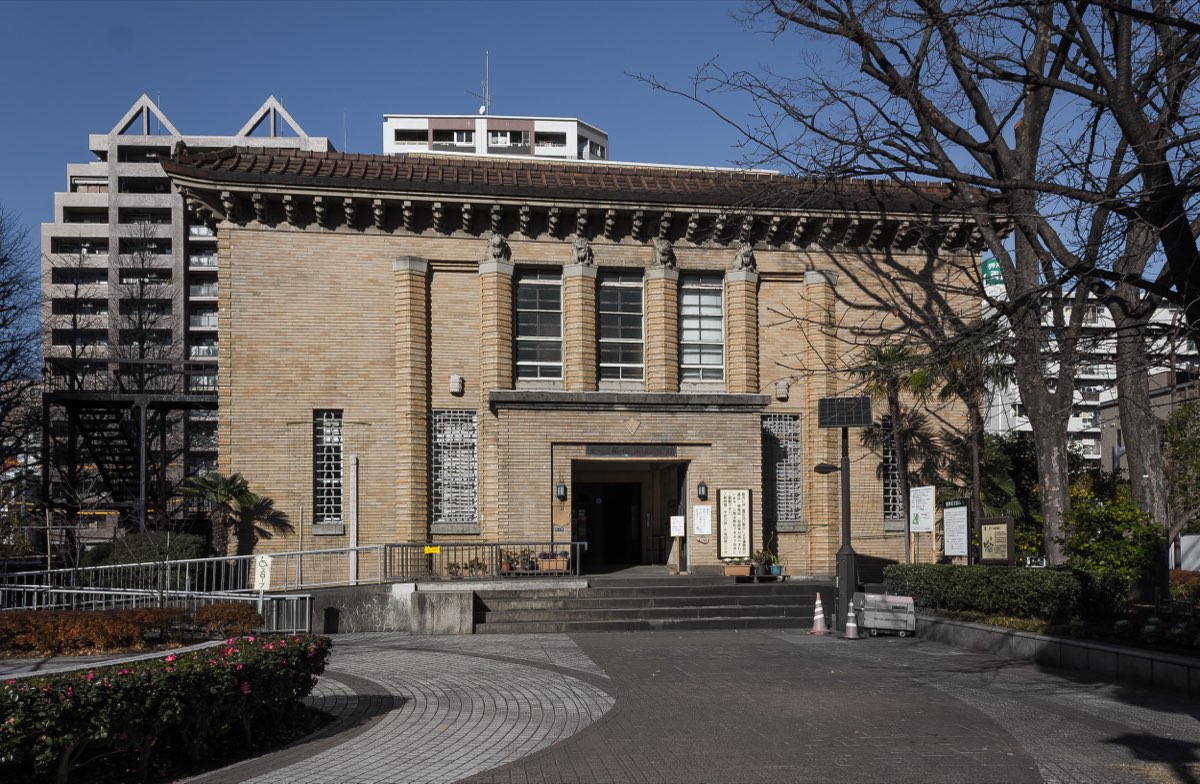
The former clothing depot site is now Yokoamichō Park in Sumida ward, opened in September 1930. According to the park's managers, its Memorial Hall and museum were built to remember the dead and the rebuilding, and the park later also became a memorial to victims of the Great Tokyo Air Raid.
The Memorial Hall, designed by Itō Chūta, was completed in 1930. The Tokyo Reconstruction Memorial Museum, completed in 1931, shows damaged objects, paintings, children's compositions, and reconstruction models.
Admission to the museum is free; check the official Yokoamichō Park website before visiting.
Sources
- 「関東大震災から100年」特設サイト 関東大震災の概要Japan Meteorological Agency
- 1923 関東大震災 報告書 第1編 第1章 被害の全体像Cabinet Office of Japan, Central Disaster Management Council (Expert Panel on the Transmission of Disaster Lessons)
- 過去の災害に学ぶ(第13回)1923(大正12)年関東大震災-揺れと津波による被害-(広報ぼうさい No.39)Cabinet Office of Japan
- 1923 関東大震災 報告書 第2編 第1章第1節 避難と消防Cabinet Office of Japan, Central Disaster Management Council (Expert Panel on the Transmission of Disaster Lessons)
- 1923 関東大震災 報告書 第2編 第4章第1節 流言蜚語と都市Cabinet Office of Japan, Central Disaster Management Council (Expert Panel on the Transmission of Disaster Lessons)
- 1923 関東大震災 報告書 第2編 第4章第2節 殺傷事件の発生Cabinet Office of Japan, Central Disaster Management Council (Expert Panel on the Transmission of Disaster Lessons)
- 1923 関東大震災 報告書 第2編 コラム8 殺傷事件の検証Cabinet Office of Japan, Central Disaster Management Council (Expert Panel on the Transmission of Disaster Lessons)
- 1923 関東大震災 報告書 第3編 第1部第1章 帝都復興の展開Cabinet Office of Japan, Central Disaster Management Council (Expert Panel on the Transmission of Disaster Lessons)
- 1923 関東大震災 報告書 第3編 コラム3 被服廠跡-震災記念堂と復興記念館-Cabinet Office of Japan, Central Disaster Management Council (Expert Panel on the Transmission of Disaster Lessons)
- Park Guide (Yokoamicho Park)Tokyo Memorial Association (公益財団法人東京都慰霊協会), designated manager of Yokoamicho Park
- 記念館の歴史(東京都復興記念館)Tokyo Memorial Association (公益財団法人東京都慰霊協会), designated manager of Yokoamicho Park
- 館内の展示(東京都復興記念館)Tokyo Memorial Association (公益財団法人東京都慰霊協会), designated manager of Yokoamicho Park
- ご利用案内(東京都復興記念館)Tokyo Memorial Association (公益財団法人東京都慰霊協会), designated manager of Yokoamicho Park