At 14:46 on 11 March 2011, a magnitude 9.0 earthquake struck off the Sanriku coast of northeastern Japan. In Japan the disaster caused by this earthquake, together with the nuclear power plant accident that followed, is officially called the Great East Japan Earthquake.
Fukushima Prefecture experienced all of it at once: shaking, tsunami, a severe nuclear accident, and an evacuation that for many people lasted years. This article separates those strands: who died and how deaths are counted, who was evacuated and for how long, what international scientific bodies say about radiation and health, and how the prefecture now keeps the memory.
Earthquake and tsunami
Fukushima Prefecture's ten-year record notes that shaking of upper 6 on the Japanese intensity scale was recorded in 11 of its municipalities, and that a huge tsunami struck a wide area. According to the prefecture's memorial museum, a tsunami of 9.3 meters or more was observed at Sōma.
Not all the deaths came from the tsunami. In Sukagawa, the Fujinuma reservoir burst and eight people died; in Shirakawa, a landslide of about 75,000 cubic meters of earth killed 13 people.
The accident at Fukushima Daiichi
When the earthquake struck, Units 1, 2, and 3 of the Fukushima Daiichi nuclear power plant were operating, and Units 4, 5, and 6 were in planned shutdown. The tsunami that followed left Units 1 to 5 without any AC power, a situation known as a station blackout.
According to the International Atomic Energy Agency (IAEA), the loss of almost all means of control led to severe damage to the reactors of Units 1, 2, and 3 and to significant releases of radioactive material from them. Hydrogen explosions occurred at Units 1, 3, and 4.
The United Nations Scientific Committee on the Effects of Atomic Radiation (UNSCEAR) calls it the largest civilian nuclear accident since Chernobyl in 1986.
The government declared a nuclear emergency at 19:03 on 11 March. That day, people within 3 kilometers of the plant were ordered to evacuate and those within 10 kilometers to shelter indoors. At 18:25 the next day the evacuation zone was widened to 20 kilometers, and on 15 March people living 20 to 30 kilometers away were told to stay indoors.
In April further zones were set: areas beyond 20 kilometers where yearly doses might reach 20 millisieverts were to be evacuated in a planned way, and on 21 April the 20-kilometer zone was designated a restricted area where entry was in principle forbidden.
Evacuation itself carried risks. The IAEA's report notes significant difficulties in moving patients out of hospitals and nursing homes within the 20-kilometer zone.
Looking at causes, the IAEA Director General wrote in 2015 that a major factor was the widespread assumption in Japan that its nuclear plants were so safe that an accident of this size was unthinkable. In his account, plant operators accepted this assumption, and neither regulators nor the government challenged it.
He also pointed to weaknesses in regulation, plant design, and emergency planning, and noted that Japan has since reformed its regulatory system.
Counting the dead
Deaths in Fukushima are counted in more than one way, and the difference matters. According to the prefecture's damage report, as of 1 August 2026 there were 1,605 direct deaths and 2,351 disaster-related deaths.
A further 226 people, whose bodies have not been confirmed but for whom death notifications have been filed, bring the total to 4,182.
Japan's Cabinet Office defines a disaster-related death as a death from the worsening of an injury caused by the disaster, or from illness brought on by the physical strain of evacuation and similar conditions, which has been recognized under the 1973 law on disaster condolence payments.
The prefecture's ten-year record describes these as deaths from indirect causes, such as declining health and exhaustion during life as an evacuee.
In the Reconstruction Agency's national tally as of 31 December 2025, there were 3,810 disaster-related deaths from the Great East Japan Earthquake across Japan, of which 2,350 were in Fukushima Prefecture. Of those 2,350, 2,112 were people aged 66 or older.
By these figures, more than half of the nationwide total was in Fukushima. The national total also includes deaths from an earthquake in northern Nagano on 12 March 2011, and the agency's 2,350 and the prefecture's 2,351 are counts at different dates.
The memorial museum links the related deaths in Fukushima to evacuation after the nuclear accident, and says they show how severe the compound disaster was.
Evacuation and return
The number of evacuees, both inside and outside the prefecture, peaked at 164,865 in May 2012, according to the prefecture's ten-year record. On 1 August 2026 the prefecture counted 22,373 evacuees: 3,899 within Fukushima, 18,469 elsewhere in Japan, and five whose whereabouts were unknown.
For evacuees within Fukushima, the prefecture counts people in temporary housing, with relatives and in similar arrangements, but not those who bought their own homes or moved into reconstruction public housing. A falling number therefore does not by itself mean that people have returned home.
Evacuation orders were lifted step by step. The Reconstruction Agency records that lifting began in Tamura on 1 April 2014, and that with the lifting in Futaba on 4 March 2020, orders had been lifted everywhere except the "difficult-to-return" zones.
In June and August 2022, orders were lifted for the whole of the designated reconstruction bases in Katsurao, Ōkuma, and Futaba, and residents could return to parts of the difficult-to-return zones for the first time.
The prefecture reports that the share of its land under evacuation orders fell from about 12 percent in April 2011 to about 2.4 percent in March 2020.
Many residents say they will not return. In surveys of residents of municipalities where orders were lifted late, the Reconstruction Agency reports that 10 to 30 percent had returned or wanted to, 10 to 20 percent were undecided, and 50 to 60 percent said they would not return.
According to its 2021 record, the prefecture's support included temporary and public housing, "mind care" centers in six locations, and 26 support offices across Japan for people living outside Fukushima.
Radiation and health
International scientific bodies have assessed the health effects of radiation from the accident. The IAEA reported in 2015 that no early radiation-induced health effects were observed among workers or the public that could be attributed to the accident.
UNSCEAR's 2020/2021 report reviewed scientific information published up to the end of 2019. Announcing it in March 2021, the Committee's chair stated that since its 2013 report, "no adverse health effects among Fukushima residents have been documented that could be directly attributed to radiation exposure from the accident."
The Committee considers future health effects directly related to radiation exposure unlikely to be discernible. It notes that evacuation averted or greatly reduced people's exposure.
After the accident, the greatest concern was thyroid cancer. A substantial number of cases have been found among exposed children. UNSCEAR believes, on the balance of available evidence, that this large increase relative to what was expected results from highly sensitive ultrasound screening, not from radiation.
Japan's Ministry of the Environment reports that in July 2023 the thyroid examination subcommittee of Fukushima Prefecture's health survey likewise found no association between thyroid cancer and radiation exposure through the fourth round of tests.
These findings concern radiation. UNSCEAR also reports increases in cardiovascular and metabolic conditions among evacuees, probably linked to social and lifestyle changes rather than radiation, and excess psychological distress after the disaster. Its report does not cover mental health or financial impacts, which lie outside its mandate.
Citing Fukushima's own health survey, the IAEA likewise notes increases in anxiety and post-traumatic stress in some vulnerable groups.
Keeping the record
On the tenth anniversary, Fukushima Prefecture published a record of the disaster and the nuclear accident, intended to pass on the record and memory of what happened and the feelings of its residents.
The memorial museum stresses that the effects continue. It names the decommissioning of the damaged plant and the final disposal outside the prefecture of soil removed in decontamination as problems with no end yet in sight.
Visiting today
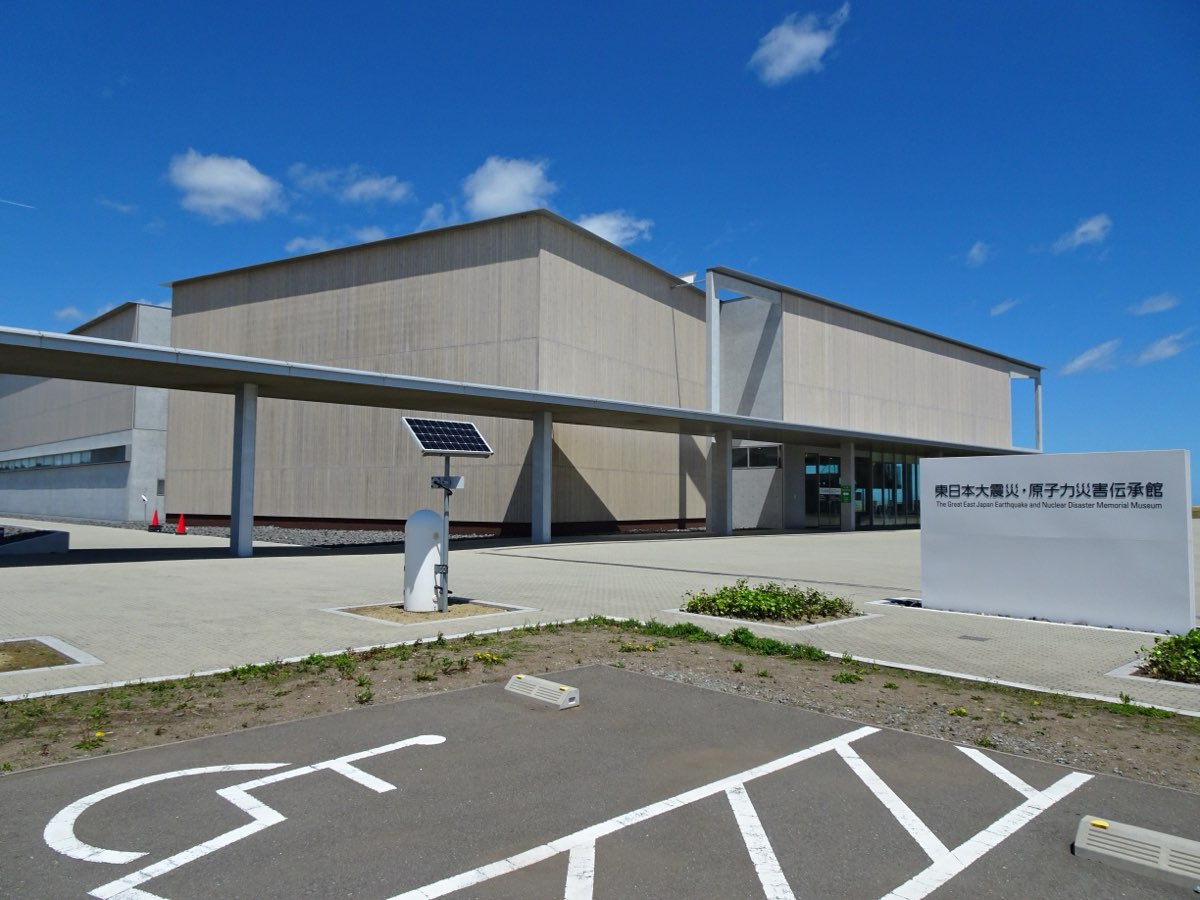
The Great East Japan Earthquake and Nuclear Disaster Memorial Museum is a prefectural facility in Futaba, which opened on 20 September 2020. It presents the compound disaster and the steps toward recovery, and residents who lived through the disaster give storytelling talks four times a day.
A free commentary guide in English and other languages covers almost all exhibit texts via the museum's Wi-Fi. The museum is about 2 kilometers from Futaba Station. Check the official website for opening hours and closing days before visiting.
Sources
- 東日本大震災 ~東北地方太平洋沖地震~ 関連ポータルサイトJapan Meteorological Agency
- 平成23年(2011年)東北地方太平洋沖地震Japan Meteorological Agency
- The Fukushima Daiichi Accident: Report by the Director GeneralInternational Atomic Energy Agency
- 東電福島第一原子力発電所事故UNSCEAR
- A decade after the Fukushima accident: Radiation-linked increases in cancer rates not expected to be seenUnited Nations Information Service Vienna (UNSCEAR press release)
- Levels and effects of radiation exposure due to the accident at the Fukushima Daiichi Nuclear Power Station: implications of information published since the UNSCEAR 2013 Report (brochure on the UNSCEAR 2020/2021 Report)United Nations Scientific Committee on the Effects of Atomic Radiation (UNSCEAR)
- 原子力災害からの復興Reconstruction Agency
- 災害関連死の定義(令和元年度資料8)Cabinet Office
- 東日本大震災における震災関連死の死者数(令和7年12月31日現在調査結果)復興庁・内閣府(防災担当)・消防庁
- 平成23年東北地方太平洋沖地震による被害状況即報(第1805報)Fukushima Prefecture (福島県災害対策本部)
- 東日本大震災・原子力災害 10年の記録(復興・再生の記録 01 福島県の被害状況/02 避難状況/03 帰還環境の整備)Fukushima Prefecture
- 避難者数の推移Fukushima Prefecture
- 東日本大震災・原子力災害10年記録誌Fukushima Prefecture
- 甲状腺検査 先行検査から本格検査(検査4回目)までの結果に対する評価の概要(放射線による健康影響等に関する統一的な基礎資料 令和7年度版)Ministry of the Environment
- 当館について – 東日本大震災・原子力災害伝承館Great East Japan Earthquake and Nuclear Disaster Memorial Museum